Introduction
When I was exchanging a few messages about my lack of sleep over the past week, someone suggested I stop having tea at 4:30 in the evening and observe the results. I didn’t agree with him initially and had only drafted a short response. But my cognitive brain turned even that into the following reflection. So, blame it on cognition for all my reflections—especially when the body sends distress signals. The body has its own mechanisms to compel both the spirit and the mind to comply with its legitimate demands.
In our fast-paced lives, we often treat the body like a machine and the mind like its master. But this illusion doesn’t last forever. Over the past week, I experienced something that reminded me—very clearly—that no matter how sharp or driven the mind may be, the body has the final say.
The brain, as I’ve come to see it, serves two distinct functions. One is physical—linked to the body’s health and biological systems. The other is cognitive—what we commonly refer to as the mind. While the physical brain and body seek rest and recovery, the cognitive mind often keeps spinning—thinking, writing, analyzing, refusing to switch off. This inner conflict may seem manageable at first. But in the long run, it’s not.
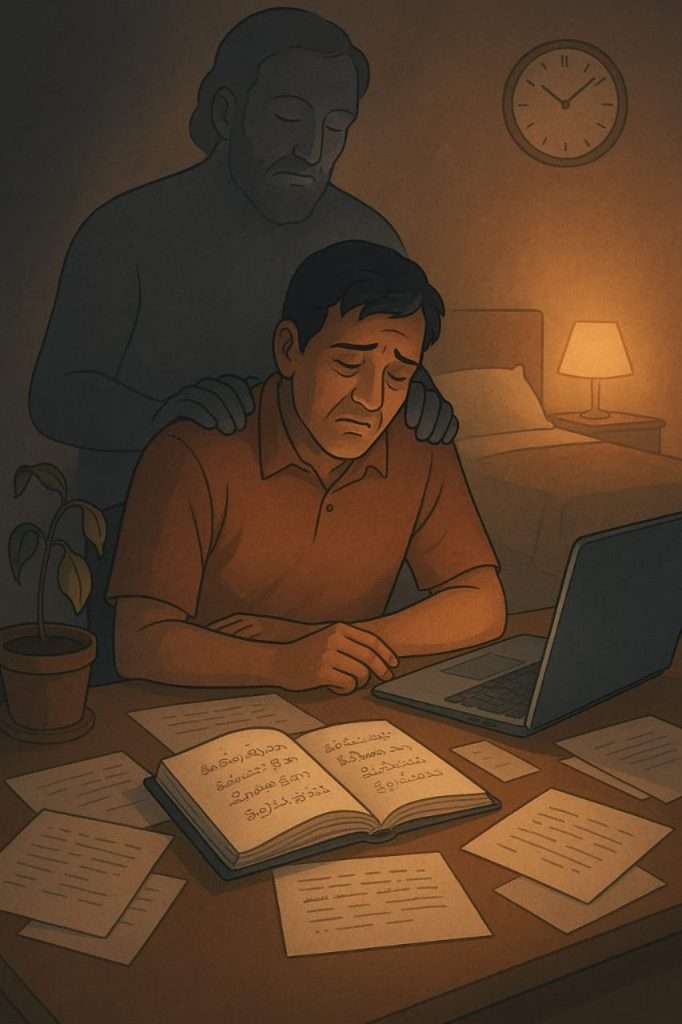
After days of intense reading, writing, and reflection, my sleep was reduced to two or three hours a night. My mind was hyperactive and relentless. But eventually, my physical brain and body began sending unmistakable signals: dizziness, fatigue, mental fog. When even my evening walk became a struggle, I knew something had to give. And it did. My cognitive brain, at last, gave in to the undeniable reality—it was time to lie down and rest.
I went to bed around 5:30 in the evening, something I never do. But this time, I had no choice. I slept for two and a half hours, got up to eat, and then continued. Yet the cycle repeated itself. That night, I slept at 1:00 AM, woke up by 3:00, and couldn’t go back to sleep. I began working again, but by 5:00 AM, exhaustion overtook me. I lay down and slept until 8:15. Later, after lunch, I rested again.
These episodes were more than moments of tiredness—they were clear messages from the physical body: “You cannot bypass me. You are not just a mind. You are matter, too.”
In our culture, we often glorify overwork, spiritual transcendence, and mental resilience. We push our limits, sometimes in the name of ambition, sometimes in the name of meditation, asceticism, or self-discipline. But there comes a moment when the body intervenes—and it always will.
At the end of the day, no philosophy, no productivity mantra, and no spiritual ideal can override the material nature of our being. We are biological beings. We are physical organisms. We are matter.
You cannot escape that truth—not through discipline, willpower, or belief. You can only respect it.
So here’s the simple lesson I’ve drawn from this experience: health comes first. Not as a theory, but as a lived reality. The mind can drive us hard, but the body has its own wisdom—and when it speaks, we must listen.
Conclusion
In the end, every human endeavor—intellectual, emotional, or spiritual—rests upon the foundation of a healthy body. No insight, no breakthrough, no act of devotion can be sustained if we neglect the basic material reality of our physical existence. The body is not just a vessel; it is a voice—one that speaks in fatigue, pain, and eventually collapse when ignored.
We may pride ourselves on mental strength or spiritual depth, but the body always brings us back to earth. Listening to it is not weakness; it is wisdom. Respecting its needs is not indulgence; it is responsibility. And healing it is not optional—it is the only way forward.
So let’s not wait for exhaustion or illness to remind us. Let’s remember that true strength begins with rest, and real freedom begins with balance.
Listening to the distress signals of the body has become more important than ever, especially in today’s high-pressure environments where people work under tight deadlines to meet specific targets. When individuals ignore their body’s warnings and push themselves beyond their limits without proper preparation or rest, they risk a breakdown at critical moments—such as during presentations—when the body might retaliate. The same applies to students who compromise their health while preparing for exams, only to underperform due to fatigue or illness.
The moral of the story is simple:
The end never justifies the means—whether ethically or physically. No achievement is worth the cost of torturing the body.
Postscript
Doctors well-trained in various fields—neurology, psychiatry, psychology, and so on—might laugh at this reflection, saying that without scientific knowledge of how the body and brain function, a layperson like me can only produce such babblings. They might even warn others not to take me seriously.
I agree with them.
I did consult a doctor, who recommended taking sleeping pills for a short period. But unwilling to rely on such external agents to “repair” my body, I chose instead to wait for it to take its natural course. Of course, one should never become their own doctor when facing any illness. Consulting a professional to diagnose the issue and prescribe the right treatment—whether the problem is physical or mental—is always the wisest course.
However, when it comes to post-treatment recovery, while one must still follow medical advice, it’s equally important to listen to one’s own body. A doctor provides normative treatments based on medical studies and common patterns, but a patient is more attuned to the subjective signals of their own body. That’s why I neither opted for sleeping pills nor believed that simply skipping a cup of tea at 4:30 p.m. would help me fall asleep after 11 p.m. Based on my experience, a limited intake of beverages does not disturb cognitive function—unless, of course, one begins to indulge in them excessively, whether it’s tea or any other drink.
So yes, we must seek help from medical professionals. But we must also learn to adapt during recovery and make lifestyle choices based not just on science but also on our body’s subtle guidance.
Ashram, May 30, 2025
Leave a Reply