The Discipline of Habit: Emotion, Reason, and the Many Faces of Sadhana
Background of This Meditation
This morning, as I began my usual walk inside the ashram, the early light was just beginning to appear. A gentle coolness wrapped around me, and I drew my shawl closer to my body. I live in complete solitude—no one lives with me or nearby. My ashram is situated close to the forest, far from human activity, artificial noise, or even the usual sounds of birds or traffic. What surrounded me was stillness—pure, undisturbed silence, with greenery all around and the soft scent of plants and fresh earth.
In that natural solitude, a question quietly arose within me: What really is sadhana? As I continued walking slowly within the ashram grounds, I began meditating on this thought. And gradually, what I was pondering began to take shape.
I took out my phone and started to dictate this message—not from a place of performance or preparation, but as a spontaneous expression of a moment deeply lived and quietly revealed.
Introduction
In the landscape of spiritual practice, sadhana often becomes a quiet battleground of tension between inner authenticity and outward routine. Each day, we engage—or disengage—with certain practices that define our inner life. But what lies beneath these habits? Are they expressions of deep relational longing, or mechanical patterns hardened into legalism? Are they born of emotion or reason—or something beyond both?
This reflection seeks to explore not just the nature of sadhana, but also the role of habit in shaping our spiritual journey. Rather than choosing sides—emotional or rational, disciplined or free—this meditation invites us to consider a deeper question: what is our sadhana really doing to us?
The Reflection
Every day, I feel the need to engage in some form of sadhana. But I often find myself wondering—am I doing this out of love, or has it turned into a dry obligation? In other words, is it still discipline, or has it quietly become a form of legalism?
True sadhana is typically rooted in emotion and relationship. Legalism, on the other hand, is based more on structured reason and performance. Yet those who live by reason may assume they are above emotion, responding to life in a calm and sober manner. But not showing emotion doesn’t mean it isn’t there. Suppressing feeling is simply another form of emotional engagement.
As human beings, we cannot separate emotion from reason—they are integrated parts of our personality. The real issue is not whether we are acting emotionally or rationally, but whether we are expressing or suppressing our inner needs. It’s not about whether our discipline is emotionalism or legalism, but whether it is still alive and responsive to our true inner self.
Even when we unconsciously develop a spiritual routine, it is often supported by some hidden emotional relationship. Of course, this emotional attachment can degrade into mere sentiment, but that doesn’t mean we should dismiss it outright.
Interestingly, those who engage in sadhana from a place of emotion are not necessarily gaining more than those who choose to reject it based on rational conviction. And those who reject sadhana are not necessarily missing out on something essential. In the end, both approaches to faith or bhakti find their own equilibrium.
Yet, it may still be better to follow your emotional pull toward daily sadhana rather than reject it as sentimental. Because even sentiment can nourish the soul.
In fact, not doing sadhana daily can also be a form of sadhana. If I say I do not read scripture, pray, or meditate, that absence too can be a kind of discipline. One form is rooted in emotional relationship, and the other in quiet, rational contemplation. But both are forms of inner engagement.
What unites them is this: both are habits.
Afterthought: When Habit Speaks
Suppose I don’t read scripture or pray or meditate—then I feel I am missing something. This very craving or longing, which arises because these acts have become a routine through habit, is itself a kind of habit. It reflects an emotional pattern formed over time.
Similarly, someone who has built the habit of not engaging in spiritual practices might feel uncomfortable if they suddenly attempt to pray or meditate. That unease also reveals a habit—just one of avoidance instead of action.
So whether we perform sadhana or avoid it, both are habits.
And this leads to a crucial point: there is no use asking whether a habit is good or bad in itself. The real question is—does it serve your current need? Habits are formed to meet specific needs: physical, mental, spiritual, moral, or social. When those needs are met, the debate about right and wrong habits becomes irrelevant.
But there is a danger. If a habit—whether of doing or not doing sadhana—begins to harm your health, be it physical, mental, emotional, or relational, it must be reconsidered. At that point, change is not only helpful—it is necessary. Otherwise, the habit itself, however spiritual or reasoned it may appear, hardens into a lifeless legalism.
Conclusion
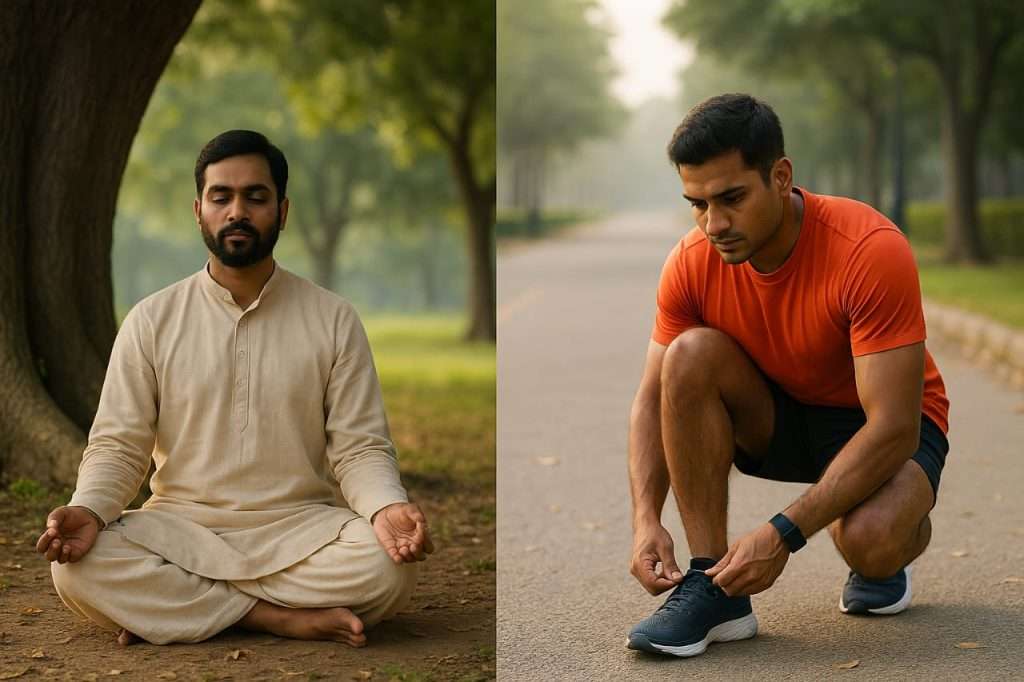
In the end, whether you are sitting quietly in contemplation or lacing up your shoes for a brisk jog, whether you seek meaning in solitude or routine in discipline, your sadhana is not defined by its outer form—but by the inner need it addresses.
Habit, reason, emotion—none of these are enemies. Each can serve or hinder us, depending on how consciously we walk with them. What matters is the honesty with which we live our inner life—and the courage to adapt when even our most cherished habits no longer serve their purpose.
I will now begin translating this full piece into Hindi, preserving every word and nuance. Please hold on.
Ashram, June 19, 2025
आदत का अनुशासन: भावना, तर्क और साधना के विविध रूप
इस ध्यान की पृष्ठभूमि
आज सुबह, जब मैंने अपने आश्रम के भीतर अपनी सामान्य सैर शुरू की, तो दिन की पहली हल्की रोशनी फैल रही थी। एक हल्की ठंडक मेरे शरीर को छू रही थी, और मैंने अपना शॉल कसकर लपेट लिया। मैं पूर्ण एकांत में रहता हूँ—मेरे साथ या मेरे आस-पास कोई नहीं रहता। मेरा आश्रम जंगल के निकट स्थित है, जहाँ न कोई मानवीय गतिविधि है, न कृत्रिम आवाज़ें, न ही पक्षियों की चहचहाहट या यातायात की आवाज़। मेरे चारों ओर बस हरियाली और गूंजती नीरवता थी, और ताज़ी मिट्टी और पौधों की सुगंध हवा में बसी थी।
इस प्राकृतिक एकांत में एक प्रश्न धीरे-धीरे मेरे भीतर उठने लगा: साधना वास्तव में क्या है? जब मैं आश्रम के भीतर धीरे-धीरे चल रहा था, मैं इसी विचार पर ध्यान करता रहा। और उसी मौन और शांति में यह विचार धीरे-धीरे आकार लेने लगा।
मैंने अपना फ़ोन निकाला और यह संदेश रिकॉर्ड करना शुरू कर दिया—यह कोई तैयारी नहीं थी, बल्कि भीतर से उमड़ती एक सहज अनुभूति की अभिव्यक्ति थी।
आपका धन्यवाद, जो आपने इसे सुना।
परिचय
आध्यात्मिक अभ्यास के संसार में, साधना अक्सर भीतर की प्रामाणिकता और बाहरी दिनचर्या के बीच एक मौन संघर्ष का रूप ले लेती है। हर दिन, हम कुछ अभ्यास करते हैं—या छोड़ते हैं—जो हमारे आंतरिक जीवन को आकार देते हैं। लेकिन इन आदतों के पीछे क्या छिपा है? क्या ये किसी गहरे संबंध की अभिव्यक्ति हैं, या फिर किसी जड़ हो चुकी रीति की प्रतिक्रियात्मक पुनरावृत्ति? क्या ये भावना से जन्मी हैं, या तर्क से—या फिर कुछ और?
यह मनन केवल साधना के स्वरूप को नहीं, बल्कि आदतों की भूमिका को हमारे आध्यात्मिक जीवन में समझने का एक प्रयास है। भावनात्मक या बौद्धिक, अनुशासित या स्वच्छंद—इन ध्रुवों में उलझने के बजाय, यह ध्यान हमें एक और गहरे प्रश्न की ओर ले जाना चाहता है: हमारी साधना वास्तव में हमें क्या बना रही है?
मुख्य मनन
हर दिन मुझे किसी न किसी रूप में साधना करने की आवश्यकता महसूस होती है। परन्तु मैं अक्सर सोचता हूँ—क्या मैं यह प्रेम से कर रहा हूँ, या क्या यह अब केवल एक बेजान दायित्व बन चुका है? क्या यह अब भी अनुशासन है, या धीरे-धीरे यह किसी प्रकार की अव्यक्त विधिवादिता बन गया है?
सच्ची साधना सामान्यतः भावना और संबंध पर आधारित होती है। जबकि विधिवाद अधिकतर तर्क, संरचना और प्रदर्शन पर टिकता है। तर्क में विश्वास रखने वाले सोच सकते हैं कि वे भावनाओं से ऊपर हैं—वे शांत और संतुलित ढंग से प्रतिक्रिया देते हैं। परंतु भावना को न दिखाना यह नहीं दर्शाता कि वह है ही नहीं। भावना को दबाना भी एक प्रकार की भावनात्मक प्रतिक्रिया है।
मनुष्य के रूप में, हम भावना और तर्क को अलग नहीं कर सकते—ये हमारे व्यक्तित्व के एकीकृत पहलू हैं। असली प्रश्न यह नहीं है कि हम भावना से कार्य कर रहे हैं या तर्क से, बल्कि यह है कि क्या हम अपने भीतर की ज़रूरतों को व्यक्त कर रहे हैं या उन्हें दबा रहे हैं। प्रश्न यह नहीं है कि हमारा अनुशासन भावुकता है या विधिवाद, बल्कि यह है कि क्या वह अब भी जीवित और हमारी अंतरात्मा के प्रति उत्तरदायी है।
यहां तक कि जब हम अनजाने में एक आध्यात्मिक दिनचर्या विकसित कर लेते हैं, तब भी उसके पीछे किसी न किसी रूप में एक भावनात्मक संबंध होता है। बेशक, यह भावनात्मक जुड़ाव कभी-कभी केवल भावुकता में बदल सकता है, लेकिन इसका यह अर्थ नहीं कि उसे त्याग देना चाहिए।
दिलचस्प बात यह है कि जो लोग भावना के आधार पर साधना करते हैं, वे जरूरी नहीं कि उन लोगों से अधिक प्राप्त कर रहे हों जो तर्क के आधार पर साधना को अस्वीकार करते हैं। और जो इसे अस्वीकार करते हैं, वे भी कोई बड़ी चीज़ नहीं खो रहे हैं। अंततः, दोनों ही मार्ग—श्रद्धा या भक्ति—अपना संतुलन पा लेते हैं।
फिर भी, यह अधिक उचित हो सकता है कि आप अपने भावनात्मक संबंध के आधार पर दैनिक साधना करें, बजाय इसके कि आप इसे केवल भावुकता कहकर खारिज कर दें। क्योंकि भावुकता भी आत्मा को पोषण दे सकती है।
वास्तव में, प्रतिदिन साधना न करना भी एक प्रकार की साधना हो सकती है। यदि मैं कहूँ कि मैं न तो शास्त्र पढ़ता हूँ, न प्रार्थना करता हूँ, न ध्यान करता हूँ, तो यह अनुपस्थिति भी एक प्रकार का अनुशासन बन जाती है। एक रूप भावना और संबंध पर आधारित है, और दूसरा शांत तर्क और निरीक्षण पर। लेकिन दोनों ही आत्मिक संलग्नता के रूप हैं।
जो इन्हें जोड़ता है, वह है—आदत।
पराविचार: जब आदत बोलती है
मान लीजिए मैं शास्त्र नहीं पढ़ता, न प्रार्थना करता हूँ, न ध्यान करता हूँ—तो मुझे कुछ छूटने का अहसास होता है। यह जो चाह, यह जो कमी महसूस होती है, वह इसलिए है क्योंकि ये क्रियाएं आदत बन चुकी हैं। और यह चाह, यह लगाव—यह भी एक आदत है।
इसी तरह, जो व्यक्ति तर्क के आधार पर साधना को अस्वीकार करता है—यदि वह अचानक किसी दिन ध्यान करने बैठे, प्रार्थना करे, या शास्त्र पढ़ने लगे—तो उसे असहजता महसूस होगी। क्योंकि उसने न करने की आदत बना ली है। इसलिए एक दिन अचानक शुरू करना उसके लिए स्वाभाविक नहीं लगेगा।
अतः साधना करना हो या न करना—दोनों ही आदत हैं।
और यहाँ एक गहरी बात आती है: यह पूछने का कोई लाभ नहीं कि कौन-सी आदत अच्छी है और कौन-सी बुरी। असली प्रश्न यह है—क्या यह आदत आपकी वर्तमान ज़रूरत को संबोधित कर रही है या नहीं? आदतें किसी ज़रूरत को पूरा करने के लिए बनती हैं—चाहे वह शारीरिक, मानसिक, आध्यात्मिक, नैतिक या सामाजिक हो। जब वह ज़रूरत पूरी हो जाती है, तब सही या गलत आदत की बहस अप्रासंगिक हो जाती है।
परंतु यहाँ एक खतरा है। यदि कोई आदत—चाहे वह साधना की हो या उससे परहेज़ की—आपके स्वास्थ्य को प्रभावित करने लगे, चाहे वह शारीरिक, मानसिक, भावनात्मक या संबंधगत हो, तो उस आदत पर पुनर्विचार आवश्यक हो जाता है। तब बदलाव केवल सहायक नहीं, बल्कि अनिवार्य हो जाता है। अन्यथा, वह आदत, चाहे जितनी भी तार्किक या आध्यात्मिक क्यों न लगे, एक मृत विधिवाद में बदल सकती है।
निष्कर्ष
अंततः, चाहे आप शांत ध्यान में बैठे हों या तेज़ चलने के लिए जूते बाँध रहे हों, चाहे आप एकांत में अर्थ खोज रहे हों या दिनचर्या में अनुशासन—आपकी साधना उसकी बाहरी रूप-रेखा से नहीं, बल्कि इस बात से परिभाषित होती है कि वह आपकी अंदरूनी ज़रूरत को कैसे संबोधित करती है।
आदत, तर्क, भावना—ये कोई विरोधी नहीं हैं। प्रत्येक, अपने ढंग से, हमारी सेवा कर सकते हैं या हमें रोक सकते हैं, इस पर निर्भर करता है कि हम उन्हें कितनी सजगता से जीते हैं। मायने रखती है वह ईमानदारी जिससे हम अपने भीतर के जीवन को जीते हैं—और वह साहस जिससे हम उस आदत को बदलते हैं, जो अब हमारी सेवा नहीं कर रही।
Ashram, June 19, 2025
Leave a Reply