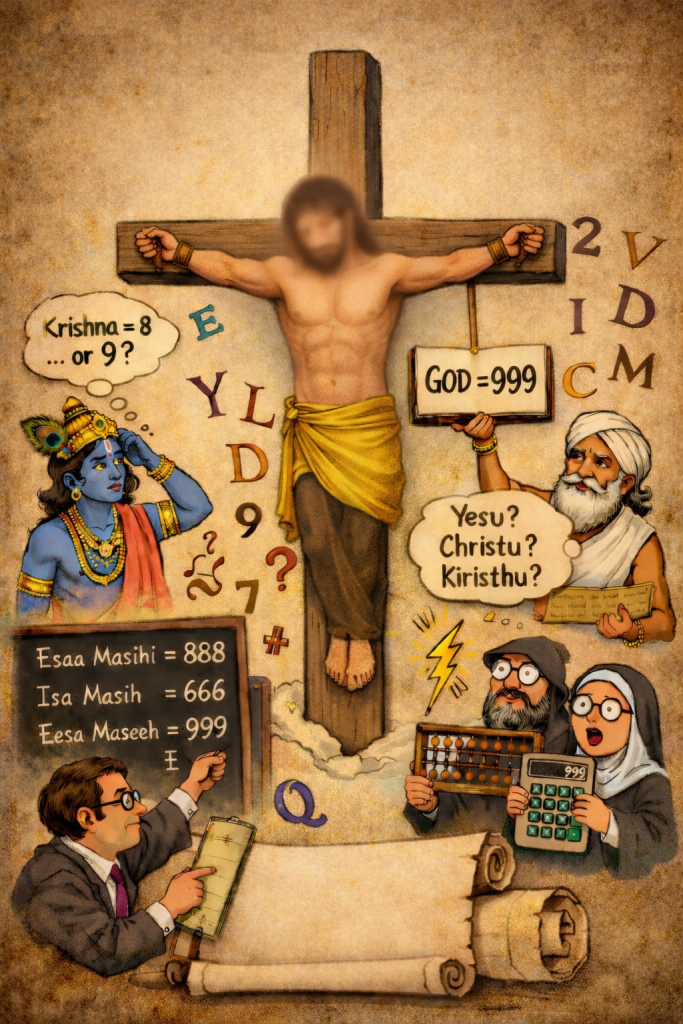
My Smiling Reflection 😄
Note: The original WhatsApp message on which this reflection is based is reproduced at the end, following the Appendix. Readers may wish to consult it first in order to better understand the context of this reflection.
Introduction
This message is wonderfully creative. The intention — unity, harmony, shared divinity — is beautiful. That spirit deserves applause.
But the mathematics here behaves like a very polite student who always writes the answer the teacher hopes to see.
Take “Esaa Masihi.” In Devanagari it is written:
ईसा मसीही
The moment we convert it into Roman letters, the adventure begins. Is it “Esaa Masihi”? “Isa Masih”? “Eesa Maseeh”? Each spelling marches confidently to a different numerical destination.
Which spelling received divine approval? Did Heaven circulate an authorized transliteration manual? 😄
Now consider “Sri Krishna.” In Sanskrit:श्री कृष्ण
Proper transliteration gives us Śrī Kṛṣṇa — with elegant dots, curls, and diacritical sophistication. But our obedient A–Z numerical system looks at “ṛ” and “ṣ” and politely faints.
So we simplify. “Krishna.” Or “Krsna.” Or perhaps “Krushna.” Each version produces a new arithmetic revelation. With a little adjustment, one can even make it end at 8 instead of 9 — conveniently aligning with the eight syllables of the Ashtakshara mantra:
ॐ नमो नारायणाय
Om Namo Narayanaya
Should we now declare that divine mathematics has changed allegiance? 😄
Poor numbers! Depending on spelling, they quietly change religions without protest. Any total divisible by 9 reduces to 9 — that is a property of arithmetic, not a certificate of cosmic endorsement. Even an electricity bill sometimes reduces to 9. The electricity board is not issuing theological statements.
Now take Tamil:
ஏசு கிறிஸ்து
Transliterate it: “Yesu Kiristhu.” Or “Yesu Christu.” Or just “Yesu.” Each yields a different numerical climax.
Which script binds the Infinite? The Divine does not submit to Unicode updates.
The authentic Ashtakshara mantra:
ॐ नमो नारायणाय
The sound is primary. Script is secondary. If tomorrow someone counts Roman letters and produces a fresh numerical “proof,” has the mantra altered its essence? Of course not.
Change the spelling — the number changes.
Change the number — the theory changes.
Change the theory — God appears to change.
The Divine remains serenely unaffected.
Truth may be One.
Paths may be many.
Scripts may be many.
Expressions may be many.
Let mathematics remain innocent.
Let languages breathe freely.
And let us not crucify the Infinite on the cross of Roman orthography. 😄
Afterthought
History reinforces this pattern. Efforts to universalize faith, language, or culture frequently generate further diversity rather than stable uniformity.
In the ancient Roman Empire, Hellenization promoted cultural and linguistic consolidation across vast territories. Yet regional traditions persisted. Imperial integration did not eliminate plurality.
The Abrahamic traditions advanced universal theological claims and expanded through missionary activity and proselytization. Over time, however, doctrinal disagreements, institutional developments, and regional contexts produced multiple interpretive communities and denominational distinctions.
The Catholic Church pursued universality through centralized authority and doctrinal coherence. Yet the Great Schism of 1054 separated Eastern and Western Christianity. The Protestant Reformation introduced additional streams — Lutheranism, Anabaptists, Anglicanism, Presbyterianism, Methodism, Baptists, Pentecostals, Restorationist movements, and many others. Groups such as Seventh-day Adventists and Jehovah’s Witnesses developed outside mainstream Protestant frameworks. The process of differentiation continues, and any attempt to produce a final count remains necessarily provisional, as new movements and denominations continue to emerge.
European colonial expansion extended not only political control but also language, script, educational models, and cultural frameworks — often employing Roman script as a medium of standardization. Educational reforms associated with Thomas Babington Macaulay illustrate this policy orientation (see Appendix).
In the present century, migration patterns have complicated this historical legacy. Populations from formerly colonized regions increasingly settle in former imperial centers, bringing languages, religions, and cultural memories once governed from afar. In several Western societies, this has generated debates over identity, integration, secularism, pluralism, and national cohesion. Ideals once articulated in universal terms — civilization, human rights, tolerance, moral leadership — are now being negotiated within their own domestic landscapes.
Historical experience suggests a recurring dynamic: attempts at imposed uniformity often yield renewed plurality. Cultural systems, religious traditions, and linguistic identities tend to resist total consolidation. The Divine, like culture itself, does not remain confined within administrative grids, alphabets, or arithmetic systems.
India’s civilizational experience offers a different paradigm: plurality without enforced homogenization. Diversity of language, script, theology, and practice coexists within broader metaphysical frameworks. Unity does not require numerical proof.
Conclusion
This circulating message — a graduate of what one might humorously call “WhatsApp University” — travels even further than what Macaulay himself could have imagined.
What began as a colonial project of linguistic standardization has now evolved into theological arithmetic conducted through Roman letters.
Let God remain God — as She is — in the native sound, script, and sacred imagination of each tradition, rather than being universalized, standardized, or inadvertently reduced through alphabetical calculation.
Unity does not require numerical certification.
Ashram
February 21, 2026
Appendix: Thomas Babington Macaulay and English Education in India
In 1835, Thomas Babington Macaulay introduced his Minute on Indian Education, advocating English as the medium of higher instruction in India. His objective was to create a class that would function as intermediaries between British rulers and the broader Indian population. He wrote:
“We must at present do our best to form a class who may be interpreters between us and the millions whom we govern; a class of persons Indian in blood and colour, but English in tastes, in opinions, in morals and in intellect.”
— Minute on Indian Education, 2 February 1835.
As discussed by Thomas R. Trautmann in Aryans and British India (New Delhi: Yoda Press, 2004, p.111), the policy reflected a broader “filtration” theory. The colonial administration, unable to educate the masses directly, intended that European learning would be transmitted indirectly through an Anglicized intermediary class.
This educational framework profoundly shaped India’s linguistic, intellectual, and cultural trajectory, leaving a legacy that continues to influence contemporary debates on language, script, and identity.
WhatsApp message:
*Very interesting & meaningful msg to share:*
*If:*
A = 1 ;
B = 2 ;
C = 3 ;
D = 4 ;
E = 5 ;
F = 6 ;
G = 7 ;
H = 8 ;
I = 9 ;
J = 10 ;
K = 11 ;
L =12 ;
M = 13 ;
N = 14 ;
O = 15 ;
P = 16 ;
Q = 17 ;
R = 18 ;
S = 19 ;
T = 20 ;
U = 21 ;
V = 22 ;
W = 23;
X =24 ;
Y = 25 ;
Z = 26.;
*Then,*
*L+O+V+E*
= 12+15+22+5
*= 54%*
*L+U+C+K ;*
=12+21+3+11
*= 47%*
*H+A+R+D+W+O+R+K*
=8+1+18+4+23+15+18+11
*= 98%*
*K+N+O+W+L+E+D+G+E*
=11+14+15+23+12+5+4+7+5
*=96%*
*None of them makes 100%.*
*Then what makes 100%?*
*Is it Money?*
.
.
*NO!*
*M+O+N+E+Y*
= 13+15+14+5+25
*=72%*
*Leadership?*
.
.
*NO!*
*L+E+A+D+E+R+S+H+I+P*
=12+5+1+4+5+18+19+8+9+16
*=97%*
*Every problem has a solution, only if we perhaps change our*
*”ATTITUDE”…*
*A+T+T+I+T+U+D+E ;*
1+20+20+9+20+21+4+5
*= 100%*
*It is therefore OUR ATTITUDE towards Life*and Work that makes*OUR Life 100% Successful.*
*Amazing mathematics*
*With each alphabet getting a number, in chronological order, as above, study the* *following, and bring down the total to a single digit and see the result yourself*
*Hindu -*
*S h r e e K r i s h n a*
19+8+18+5+5+11+18+9+19+8+14+1
=135
*=1+3+5 = 9*
*Muslim*
*M o h a m m e d*
13+15+8+1+13+13+5+4
= 72
*= 7+2 = 9*
*Jain*
*M a h a v i r*
13+1+8+1+22+9+18
=72
*= 7+2= 9*
*Sikh*
*G u r u N a n a k*
7+21+18+21+14+1+14+1+11
=108
*=1+0+8 = 9*
*Parsi*
*Z a r a t h u s t r a*
26+1+18+1+20+8+21+19+20+18+1
=153
*=1+5+3 = 9*
*Buddhist*
*G a u t a m*
7+1+21+20+1+13
=63
*= 6+3 = 9*
*Christian*
*E s a M e s s i a h*
5+19+1+13+5+19+19+9+1+8
=99
9+9=18
*1+8 = 9*
*Each one ends with number 9*
*THAT IS NATURE’S CREATION TO SHOW THAT GOD IS ONE !!!*
👈 *who ever created this msg’s great…..* *msg*👌👌👌👌💖✨✨✨🌟🌟🌟✨✨💖💖
*plz share it to all ur friends*👍👆👍
बहुत सुंदर रचना है, स्वामीजी 😊
नीचे आपका पूरा लेख हिंदी में अनुवादित रूप में प्रस्तुत है — भाव, विनोद और गंभीरता को यथावत रखते हुए।
रोमन लिपि पर ईश्वर को क्रूस पर चढ़ाना
मेरी मुस्कुराती हुई चिंतन-प्रतिक्रिया 😄
नोट: जिस मूल व्हाट्सऐप संदेश पर यह चिंतन आधारित है, वह परिशिष्ट के बाद अंत में दिया गया है। संदर्भ को समझने के लिए पाठक पहले उसे देख सकते हैं।
प्रस्तावना
यह संदेश अत्यंत रचनात्मक है। इसका उद्देश्य — एकता, सौहार्द और साझा दिव्यता — अत्यंत सुंदर है। उस भावना की सराहना होनी ही चाहिए।
लेकिन यहाँ गणित एक बहुत आज्ञाकारी विद्यार्थी की तरह व्यवहार करता है — जो वही उत्तर लिखता है, जिसकी शिक्षक को पहले से आशा होती है।
“ईसा मसीही” को ही लीजिए। देवनागरी में यह लिखा जाता है:
ईसा मसीही
जैसे ही हम इसे रोमन अक्षरों में बदलते हैं, यात्रा आरंभ हो जाती है। “Esaa Masihi”? “Isa Masih”? “Eesa Maseeh”? हर वर्तनी एक अलग संख्यात्मक परिणाम तक पहुँचती है।
तो कौन-सी वर्तनी को स्वर्ग से अनुमोदन प्राप्त हुआ? क्या स्वर्ग ने अधिकृत लिप्यंतरण पुस्तिका जारी की है? 😄
अब “श्री कृष्ण” पर विचार कीजिए:
श्री कृष्ण
शुद्ध लिप्यंतरण में यह “Śrī Kṛṣṇa” बनता है — बिंदुओं और विशेष चिह्नों के साथ। परंतु हमारी सरल A–Z प्रणाली “ṛ” और “ṣ” को देखकर मानो मूर्छित हो जाती है।
तो हम इसे सरल बना देते हैं — “Krishna” या “Krsna” या “Krushna।” हर रूप एक नई अंकगणितीय “प्रकाशना” देता है। थोड़ी सी फेरबदल से परिणाम 9 के स्थान पर 8 भी हो सकता है — जो अष्टाक्षर मंत्र की आठ ध्वनियों से मेल खा जाए:
ॐ नमो नारायणाय
Om Namo Narayanaya
तो क्या अब हमें घोषित कर देना चाहिए कि दैवी गणित ने पक्ष बदल लिया है? 😄
बेचारे अंक! वर्तनी बदलते ही धर्म बदल लेते हैं। कोई भी संख्या जो 9 से विभाज्य है, 9 में सिमट जाती है — यह गणित का नियम है, ब्रह्मांड की मोहर नहीं। बिजली का बिल भी कभी-कभी 9 में सिमट जाता है। इससे बिजली विभाग धर्मशास्त्र सिद्ध नहीं करता।
अब तमिल का उदाहरण लीजिए:
ஏசு கிறிஸ்து
इसे रोमन में लिखें — “Yesu Kiristhu,” “Yesu Christu,” या केवल “Yesu।” हर रूप एक अलग संख्यात्मक परिणाम देता है।
क्या कोई एक लिपि अनंत को बाँध सकती है? दिव्यता यूनिकोड के अनुसार स्वयं को नहीं बदलती।
अष्टाक्षर मंत्र:
ॐ नमो नारायणाय
ध्वनि प्राथमिक है, लिपि द्वितीयक। यदि कल कोई रोमन अक्षरों में इसकी गणना कर नया “प्रमाण” प्रस्तुत करे, तो क्या मंत्र का सार बदल जाएगा? कदापि नहीं।
वर्तनी बदली — संख्या बदली।
संख्या बदली — सिद्धांत बदला।
सिद्धांत बदला — तो ईश्वर बदलता हुआ प्रतीत होता है।
परंतु दिव्यता अचल रहती है।
सत्य एक हो सकता है।
मार्ग अनेक हो सकते हैं।
लिपियाँ अनेक हो सकती हैं।
अभिव्यक्तियाँ अनेक हो सकती हैं।
गणित को निर्दोष रहने दें।
भाषाओं को स्वतंत्र साँस लेने दें।
और अनंत को रोमन वर्तनी के क्रूस पर मत चढ़ाइए। 😄
पश्चविचार
इतिहास भी यही संकेत देता है। विश्वास, भाषा या संस्कृति को सार्वभौमिक बनाने के प्रयास प्रायः स्थायी एकरूपता के स्थान पर और अधिक विविधता उत्पन्न करते हैं।
प्राचीन रोमन साम्राज्य में हेलेनिकीकरण द्वारा सांस्कृतिक और भाषायी एकीकरण का प्रयास किया गया, परंतु स्थानीय परंपराएँ बनी रहीं। साम्राज्य विविधता को समाप्त नहीं कर सका।
अब्राहमिक परंपराओं ने सार्वभौमिक धार्मिक दावे प्रस्तुत किए और मिशनरी गतिविधियों द्वारा विस्तार किया। परंतु समय के साथ सिद्धांतिक मतभेदों और क्षेत्रीय परिस्थितियों ने अनेक संप्रदायों और व्याख्यात्मक समुदायों को जन्म दिया।
कैथोलिक चर्च ने केंद्रीकृत अधिकार और सिद्धांतगत एकरूपता के माध्यम से सार्वभौमिकता का प्रयास किया। किंतु 1054 का महान विभाजन पूर्वी और पश्चिमी ईसाई जगत को अलग कर गया। प्रोटेस्टेंट सुधार आंदोलन ने और भी धाराएँ उत्पन्न कीं — लूथरन, एनेबैप्टिस्ट, एंग्लिकन, प्रेस्बिटेरियन, मेथोडिस्ट, बैपटिस्ट, पेंटेकोस्टल, रिस्टोरेशनिस्ट और अनेक अन्य। कुछ समूह मुख्यधारा प्रोटेस्टेंट परंपरा से बाहर भी विकसित हुए। यह विभाजन-प्रक्रिया आज भी जारी है।
यूरोपीय औपनिवेशिक विस्तार ने केवल राजनीतिक नियंत्रण ही नहीं बढ़ाया, बल्कि भाषा, लिपि, शैक्षिक मॉडल और सांस्कृतिक ढाँचों का भी प्रसार किया — जिसमें प्रायः रोमन लिपि को मानकीकरण के माध्यम के रूप में अपनाया गया। थॉमस बैबिंगटन मैकॉले से जुड़ी शैक्षिक सुधार नीतियाँ इस नीति-दृष्टि का उदाहरण प्रस्तुत करती हैं (परिशिष्ट देखें)।
वर्तमान शताब्दी में प्रवासन की धाराओं ने इस ऐतिहासिक विरासत को और जटिल बना दिया है। पूर्व उपनिवेशित क्षेत्रों से आने वाली जनसंख्या अब बढ़ती हुई संख्या में पूर्व साम्राज्यवादी केंद्रों में बस रही है, और अपने साथ वे भाषाएँ, धर्म और सांस्कृतिक स्मृतियाँ ला रही हैं, जिन्हें कभी दूर से शासित किया जाता था। अनेक पश्चिमी समाजों में इससे पहचान, समावेशन, धर्मनिरपेक्षता, बहुलता और राष्ट्रीय एकता जैसे विषयों पर गहन बहसें उत्पन्न हुई हैं। जो आदर्श कभी सार्वभौमिक शब्दावली में व्यक्त किए गए थे — जैसे सभ्यता, मानवाधिकार, सहिष्णुता और नैतिक नेतृत्व — वे अब उन्हीं समाजों के भीतर पुनः विचार और पुनः संवाद का विषय बन रहे हैं।
इतिहास यह दर्शाता है कि आरोपित एकरूपता प्रायः नई बहुलता को जन्म देती है। संस्कृति और आस्था को पूर्णतः एक ढाँचे में बाँधा नहीं जा सकता। दिव्यता प्रशासनिक संरचनाओं, अक्षरों या संख्याओं में सीमित नहीं रहती।
भारत की सभ्यतागत परंपरा एक भिन्न दृष्टिकोण प्रस्तुत करती है — विविधता के भीतर सहअस्तित्व। यहाँ एकता को अंकगणितीय प्रमाण की आवश्यकता नहीं।
निष्कर्ष
यह संदेश — जिसे हम हल्के हास्य में “व्हाट्सऐप विश्वविद्यालय” का स्नातक कह सकते हैं — उस दिशा में आगे बढ़ गया है, जिसकी शायद किसी ने कल्पना भी नहीं की थी।
जो कभी भाषायी मानकीकरण की औपनिवेशिक परियोजना थी, वह अब रोमन अक्षरों के माध्यम से दार्शनिक गणित बन गई है।
ईश्वर को ईश्वर ही रहने दें — जैसे वह अपनी-अपनी मातृभाषा, लिपि और आध्यात्मिक कल्पना में अनुभव की जाती है — न कि उन्हें अक्षरों की गणना में सीमित या संकुचित कर दें।
एकता को संख्यात्मक प्रमाण की आवश्यकता नहीं।
आश्रम
21 फरवरी, 2026
Leave a Reply