The Queen on the Throne
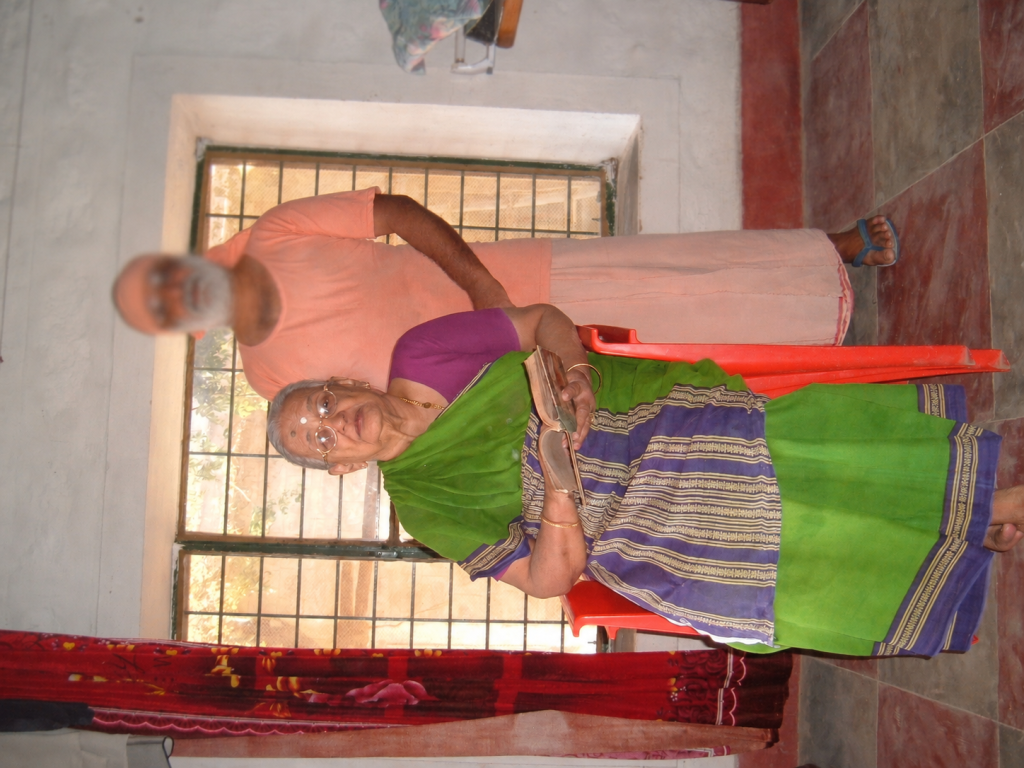
This is the story behind the photograph attached here.
At first glance, it appears to be a simple family photograph. My mother sits majestically on a chair, looking every bit the queen she believed herself to be. Standing behind her is her son—myself—looking less like the head of an ashram and more like a loyal attendant awaiting further instructions.
But behind this seemingly ordinary photograph lies a much larger story.
It is that story I wish to share on the occasion of my mother’s hundredth birth anniversary.
Behind every great mother, there stands a child—most probably a son. More often than not, he remains comfortably hidden in the shadow of her greatness. He may grow older, acquire degrees, become successful, gain experience, and even become a sannyasi. None of it matters. In his mother’s eyes, he remains a work in progress.
For a bachelor—and especially for a sannyasi—a mother often remains the ultimate abode of comfort, safety, and security.
That is perhaps why, in our tradition, a sannyasi may not bow before his father or even before senior relatives, but he is still expected to bow before his mother. More importantly, if the responsibility falls upon him, he must care for her until the very end.
God granted me that privilege.
After my father passed away, my mother chose to come and live with me in the ashram. Of all her children, she chose me. For more than twenty years, she remained there until the end of her life.
My brothers and sisters occasionally made brave attempts to keep her with them. Their hospitality, however, usually had a very short shelf life. Before long, she would return to the ashram, where her authority remained largely unquestioned. The others, being married, had inconvenient complications such as spouses, households, and independent opinions. I, on the other hand, was a swami. Resistance was neither expected nor particularly successful. Thus, by a process that can only be described as natural selection, I became her permanent caretaker, attendant, and, quite possibly, favourite pet.
It was an opportunity she gave me, a blessing God bestowed upon me, and a grace sustained by her own blessings. Thus, I was able to perform my dharma as a son until her final days.
My siblings, however, had a different interpretation.
According to them, I was entirely responsible for making my mother impossible to manage.
“You are the one who spoiled her,” they would complain. “You agree to everything she says. You never oppose her. That is why she listens to nobody anymore.”
In their eyes, she had become not merely the matriarch of the family but its undisputed dictator.
My defence was always simple.
“Please don’t blame me alone. This is not my invention. It is built into biology itself. SHOW ME ONE SON IN THE ENTIRE HISTORY OF HUMANITY WHO SUCCESSFULYLY MADE HIS MOTHER LISTEN TO HIM!”
Sometimes a husband may succeed in making his wife listen to him—if not fully agree, at least politely acknowledge his point. But between a mother and a son, such miracles are not part of the contract. In that relationship, the mother does not “listen,” she only occasionally pauses for breath before continuing her own version of reality.
Thousands of years have passed. Civilizations have risen and fallen. Empires have appeared and disappeared. Yet no son has ever managed to convince his mother that he finally knows how to live.
I certainly did not succeed.
Even when I became old, my mother continued to treat me as a little infant. She never considered me mature enough.
According to her, I was hopeless.
I knew nothing.
I could not take care of myself.
I had no idea how to live properly.
I naturally disagreed with her assessment, though rarely with any measurable success.
As a result, we spent more than twenty years engaged in a series of affectionate battles.
Whenever she crossed what I considered the Lakshman Rekha and became excessively enthusiastic in directing my life, I would threaten to deploy my ultimate weapon.
My Brahmastra.
My BrahMos missile.
“I am warning you,” I would say. “If you continue like this, I am going to call your daughter and ask her to talk to you.”
The effect was immediate.
“No! No! Don’t call her!”
This was the same woman who could ignore my arguments, dismiss my protests, and effortlessly overrule my objections.
Yet she feared a phone call from her daughter.
The reason was simple.
“She will never allow me to speak,” my mother would complain. “She will talk and talk and talk. In the end I will only be listening.”
That was the moment I enjoyed most.
With enormous satisfaction I would reply:
“அந்த பயம் உனக்கு இருக்கட்டும்.”
“Good. Let you have that fear.”
For a brief moment, I would feel victorious.
But my celebrations never lasted long.
Refusing to accept defeat, my mother would immediately retaliate by launching her own Nagastra.
Her favourite missile was devastating.
“Fortunately, one woman escaped from you.”
Then she would pause for effect.
“That is why you never got married. Otherwise I feel sorry for the poor woman.”
Having launched this missile, she would sit back with great satisfaction.
But I was not prepared to surrender.
Immediately I would counterattack.
“Why don’t you look at it from another angle? Fortunately, one daughter-in-law escaped from you.”
For a few seconds there would be silence.
Then both of us would burst into laughter.
Deep down, both of us knew there was at least a grain of truth in both statements.
Peace would then descend upon the kingdom.
Not permanent peace.
Merely a ceasefire.
Something like a Memorandum of Understanding.
We would laugh, declare the matter settled, and return to our normal lives.
The treaty would remain valid for a few days.
Sometimes a week.
Rarely longer.
Then somebody would violate the agreement.
Fresh hostilities would begin.
The BrahMos missile would be launched.
The Nagastra would respond.
Peace talks would collapse.
And the great mother-son war would resume.
Looking back today, those endless battles have become some of my most treasured memories.
My mother passed away on 26 December 2022..
I miss her deeply.
Not merely because she was my mother, but because she gave me the rare privilege of sharing such a lively relationship with her.
Ours was a curious mixture of love and combat, affection and irritation, surrender and resistance.
There were days when she drove me to exasperation.
There were undoubtedly days when I returned the favour.
Yet beneath every argument was affection.
Beneath every complaint was concern.
Beneath every missile strike was love.
Today, when I look at this photograph, I no longer see who won those battles.
I see a queen seated proudly upon her throne.
I see her most loyal subject standing faithfully behind her.
I see twenty years of arguments.
Twenty years of laughter.
Twenty years of peace treaties.
Twenty years of broken peace treaties.
And above all, twenty years of companionship.
Many people are blessed with loving mothers.
Some are blessed with wise mothers.
A few are blessed with mothers who become their closest friends.
I was blessed with a mother who was all three—and who also happened to be my most formidable opponent.
The throne remains.
The queen is gone.
But the kingdom of memories she left behind continues to flourish.
And on her hundredth birthday, this hidden story behind a simple photograph is my humble tribute to Her Majesty.
Ashram, June 19, 2026
हर महान माँ के पीछे: माँ का लाड़ला
सिंहासन पर विराजमान रानी
यह उस चित्र की कहानी है जो यहाँ संलग्न है।
पहली दृष्टि में यह एक साधारण पारिवारिक तस्वीर प्रतीत होती है। मेरी माँ एक कुर्सी पर राजसी गरिमा के साथ बैठी हैं, बिल्कुल वैसी ही रानी जैसी वे स्वयं को समझती थीं। उनके पीछे उनका पुत्र—अर्थात् मैं—खड़ा हूँ, जो किसी आश्रम के प्रमुख से कम और किसी आज्ञाकारी सेवक से अधिक प्रतीत होता है, मानो अगले आदेश की प्रतीक्षा कर रहा हो।
किन्तु इस साधारण–सी दिखाई देने वाली तस्वीर के पीछे एक कहीं बड़ी कहानी छिपी हुई है।
अपनी माँ की शताब्दी जयंती के अवसर पर मैं वही कहानी साझा करना चाहता हूँ।
हर महान माँ के पीछे एक बच्चा खड़ा होता है—अधिकतर एक बेटा। प्रायः वह उसकी महानता की छाया में सहज रूप से छिपा रहता है। वह उम्र में बड़ा हो सकता है, अनेक उपाधियाँ प्राप्त कर सकता है, सफल हो सकता है, अनुभव अर्जित कर सकता है, यहाँ तक कि संन्यासी भी बन सकता है। किन्तु इन सबका कोई विशेष महत्व नहीं होता। अपनी माँ की दृष्टि में वह सदैव एक अधूरी परियोजना ही बना रहता है।
एक अविवाहित व्यक्ति के लिए—और विशेषकर एक संन्यासी के लिए—माँ अक्सर स्नेह, सुरक्षा और आश्रय का अंतिम ठिकाना बनी रहती है।
शायद इसी कारण हमारी परम्परा में एक संन्यासी अपने पिता अथवा अन्य वरिष्ठ संबंधियों को प्रणाम न करे, तो भी अपनी माँ को प्रणाम करना उसका कर्तव्य माना जाता है। इससे भी अधिक महत्त्वपूर्ण बात यह है कि यदि परिस्थितियाँ उसे यह दायित्व सौंपें, तो उसे अपनी माँ की अंतिम साँस तक सेवा करनी चाहिए।
भगवान ने मुझे यह सौभाग्य प्रदान किया।
मेरे पिता के निधन के बाद मेरी माँ ने आश्रम में आकर मेरे साथ रहने का निर्णय लिया। अपने सभी बच्चों में से उन्होंने मुझे चुना। अगले बीस वर्षों से भी अधिक समय तक वे मेरे साथ रहीं और अपने जीवन के अंतिम क्षण तक वहीं रहीं।
मेरे भाई–बहनों ने समय–समय पर उन्हें अपने साथ रखने के कुछ साहसिक प्रयास अवश्य किए। किन्तु उनका यह आतिथ्य सामान्यतः बहुत अल्पकालिक सिद्ध होता था। शीघ्र ही माँ पुनः आश्रम लौट आतीं, जहाँ उनका अधिकार लगभग निर्विवाद बना रहता था।
अन्य सभी विवाहित थे। उनके जीवन में जीवनसाथी, परिवार, गृहस्थी और स्वतंत्र विचार जैसे कुछ असुविधाजनक तत्व उपस्थित थे। दूसरी ओर, मैं एक स्वामी था। मेरे लिए प्रतिरोध करना न तो अपेक्षित था और न ही विशेष रूप से सफल होने वाला था।
इस प्रकार, एक ऐसी प्रक्रिया द्वारा जिसे केवल “प्राकृतिक चयन” कहा जा सकता है, मैं उनका स्थायी परिचारक, सेवक और सम्भवतः उनका सबसे प्रिय पालतू प्राणी बन गया।
यह अवसर उन्होंने मुझे दिया था; यह आशीर्वाद भगवान ने मुझे प्रदान किया था; और यह कृपा उनकी अपनी शुभकामनाओं से निरंतर बनी रही। इसी कारण मैं अपने पुत्रधर्म का पालन उनके अंतिम दिनों तक कर सका।
हालाँकि, मेरे भाई–बहनों की इस विषय में एक भिन्न व्याख्या थी।
उनके अनुसार, मेरी माँ को दूसरों के लिए असम्भव बना देने का पूरा श्रेय मुझे ही जाता था।
वे शिकायत करते हुए कहते,
“उन्हें बिगाड़ने वाले तुम ही हो। वे जो कुछ भी कहती हैं, तुम मान लेते हो। तुम कभी उनका विरोध नहीं करते। इसी कारण अब वे किसी और की बात सुनती ही नहीं हैं।“
उनकी दृष्टि में माँ केवल परिवार की मुखिया भर नहीं रह गई थीं; वे उसकी निर्विवाद तानाशाह बन चुकी थीं।
मेरी सफ़ाई हमेशा बहुत सरल होती थी।
“सारा दोष मुझ पर मत डालो। यह मेरी खोज नहीं है। यह तो जीवविज्ञान के नियमों में ही लिखा हुआ है। मुझे मानव इतिहास का केवल एक ऐसा पुत्र दिखा दीजिए जिसने अपनी माँ को सफलतापूर्वक अपनी बात मनवा ली हो!”
कभी–कभी कोई पति अपनी पत्नी को अपनी बात सुनाने में सफल हो सकता है। भले ही वह उससे पूरी तरह सहमत न हो, कम से कम शिष्टाचारवश उसकी बात मान लेने का आभास तो दे सकती है। लेकिन माँ और बेटे के संबंध में ऐसे चमत्कार अनुबंध का हिस्सा नहीं होते।
उस रिश्ते में माँ “सुनती” नहीं है; वह केवल कभी–कभार साँस लेने के लिए रुकती है, ताकि अपनी वास्तविकता का अगला अध्याय सुना सके।
हज़ारों वर्ष बीत चुके हैं।
सभ्यताएँ उठीं और मिट गईं।
साम्राज्य बने और विलीन हो गए।
लेकिन आज तक कोई पुत्र अपनी माँ को यह विश्वास नहीं दिला पाया कि अब उसे जीवन जीना आ गया है।
मैं भी इसमें सफल नहीं हुआ।
जब मैं स्वयं वृद्ध हो गया, तब भी मेरी माँ मुझे एक छोटे बच्चे की तरह ही देखती रहीं। उनकी दृष्टि में मैं कभी पर्याप्त परिपक्व नहीं हुआ।
उनके अनुसार, मैं एक निराशाजनक प्राणी था।
मुझे कुछ भी नहीं आता था।
मैं अपना ध्यान भी नहीं रख सकता था।
मुझे ठीक से जीना भी नहीं आता था।
स्वाभाविक रूप से मैं उनके इस मूल्यांकन से सहमत नहीं था, यद्यपि मेरे असहमत होने का परिणाम शायद ही कभी मेरे पक्ष में जाता था।
फलस्वरूप, बीस वर्षों से अधिक समय तक हमारा जीवन प्रेमपूर्ण युद्धों की एक निरन्तर श्रृंखला बना रहा।
जब भी मुझे लगता कि माँ मेरी जीवन–व्यवस्था में आवश्यकता से अधिक उत्साह दिखाते हुए मेरी निर्धारित ‘लक्ष्मण रेखा’ पार कर रही हैं, तब मैं अपने अंतिम अस्त्र का प्रयोग करने की धमकी देता था।
मेरा ब्रह्मास्त्र।
मेरा ब्रह्मोस मिसाइल।
मैं कहता,
“मैं आपको चेतावनी दे रहा हूँ। यदि आप ऐसे ही चलती रहीं, तो मैं आपकी बेटी को फ़ोन करके आपसे बात करने के लिए कह दूँगा।”
इसका प्रभाव तत्काल होता था।
“नहीं! नहीं! उसे मत बुलाओ!”
यह वही महिला थीं जो मेरे तर्कों को अनदेखा कर सकती थीं, मेरी आपत्तियों को खारिज कर सकती थीं और मेरे निर्णयों को सहजता से निरस्त कर सकती थीं।
लेकिन अपनी बेटी के एक फ़ोन से वे घबरा जाती थीं।
कारण बहुत सरल था।
माँ शिकायत करतीं,
“वह मुझे बोलने ही नहीं देगी। बस बोलती ही जाएगी, बोलती ही जाएगी, बोलती ही जाएगी। अंत में केवल मुझे ही सुनना पड़ेगा।”
यही वह क्षण था जिसका मैं सबसे अधिक आनंद लेता था।
बड़े संतोष के साथ मैं उत्तर देता,
“अच्छा है। यह डर बना रहना चाहिए।”
कुछ क्षणों के लिए मुझे विजय का अनुभव होता था।
लेकिन मेरी विजय–उत्सव कभी अधिक देर तक नहीं टिकते थे।
पराजय स्वीकार करने से इंकार करते हुए माँ तुरंत अपना नागास्त्र छोड़ देती थीं।
उनकी प्रिय मिसाइल अत्यंत विनाशकारी थी।
“सौभाग्य से एक स्त्री तुमसे बच निकली।”
फिर वे नाटकीय प्रभाव के लिए थोड़ी देर रुकतीं।
“इसीलिए तुम्हारी शादी नहीं हुई। नहीं तो उस बेचारी स्त्री पर मुझे बहुत दया आती।”
यह मिसाइल दागने के बाद वे बड़े संतोष के साथ बैठ जातीं।
लेकिन मैं भी आत्मसमर्पण करने वालों में से नहीं था।
मैं तुरंत पलटवार करता।
“इसे एक दूसरे कोण से भी तो देखिए। सौभाग्य से एक बहू भी आपसे बच निकली।”
कुछ क्षणों के लिए वहाँ पूर्ण मौन छा जाता।
फिर हम दोनों ज़ोर से हँस पड़ते।
हम दोनों भीतर ही भीतर जानते थे कि दोनों बातों में कम से कम थोड़ा–सा सत्य अवश्य था।
इसके बाद राज्य में शांति स्थापित हो जाती।
स्थायी शांति नहीं।
केवल युद्धविराम।
कुछ वैसा ही जैसे कोई आपसी समझौता–पत्र।
हम हँसते, घोषणा करते कि मामला समाप्त हो गया है, और फिर अपने–अपने सामान्य जीवन में लौट जाते।
यह संधि कुछ दिनों तक प्रभावी रहती।
कभी–कभी एक सप्ताह तक।
बहुत कम अवसरों पर उससे अधिक।
फिर कोई न कोई उस समझौते का उल्लंघन कर देता।
नई शत्रुताएँ प्रारम्भ हो जातीं।
ब्रह्मोस मिसाइल पुनः प्रक्षेपित होती।
नागास्त्र उसका उत्तर देता।
शांति–वार्ताएँ विफल हो जातीं।
और माँ–बेटे का महान युद्ध फिर से आरम्भ हो जाता।
आज पीछे मुड़कर देखता हूँ, तो वे अंतहीन लड़ाइयाँ मेरी सबसे प्रिय स्मृतियों में बदल चुकी हैं।
मेरी माँ का निधन 26 दिसम्बर 2022 को हुआ।
मैं उन्हें गहराई से याद करता हूँ।
केवल इसलिए नहीं कि वे मेरी माँ थीं, बल्कि इसलिए भी कि उन्होंने मुझे उनके साथ इतना जीवंत और अद्वितीय संबंध जीने का दुर्लभ सौभाग्य प्रदान किया।
हमारा संबंध प्रेम और संघर्ष, स्नेह और झुँझलाहट, समर्पण और प्रतिरोध का एक विचित्र मिश्रण था।
ऐसे दिन भी थे जब वे मुझे अत्यन्त परेशान कर देती थीं।
और निस्संदेह ऐसे दिन भी रहे होंगे जब मैंने भी उन्हें वैसी ही परेशानी दी होगी।
किन्तु हर तर्क–वितर्क के नीचे स्नेह था।
हर शिकायत के नीचे चिंता थी।
और हर मिसाइल प्रहार के नीचे प्रेम था।
आज जब मैं इस तस्वीर को देखता हूँ, तो मुझे यह नहीं दिखाई देता कि उन लड़ाइयों में कौन जीता और कौन हारा।
मुझे एक रानी दिखाई देती है, जो अपने सिंहासन पर गर्व के साथ विराजमान है।
मुझे उसका सबसे निष्ठावान प्रजाजन दिखाई देता है, जो उसके पीछे श्रद्धापूर्वक खड़ा है।
मुझे बीस वर्षों के तर्क–वितर्क दिखाई देते हैं।
बीस वर्षों की हँसी दिखाई देती है।
बीस वर्षों की शांति–संधियाँ दिखाई देती हैं।
बीस वर्षों तक टूटी हुई शांति–संधियाँ दिखाई देती हैं।
और सबसे बढ़कर, बीस वर्षों की संगति दिखाई देती है।
बहुत से लोग स्नेहमयी माताओं का आशीर्वाद पाते हैं।
कुछ लोग बुद्धिमान माताओं का।
और कुछ सौभाग्यशाली लोग ऐसी माताओं का, जो उनकी सबसे निकट की मित्र बन जाती हैं।
मुझे ऐसी माँ का आशीर्वाद मिला जो ये तीनों थीं—और साथ ही मेरी सबसे शक्तिशाली प्रतिद्वन्द्वी भी।
सिंहासन अब भी वहीं है।
रानी चली गई है।
किन्तु स्मृतियों का वह राज्य, जो वे अपने पीछे छोड़ गईं, आज भी फल–फूल रहा है।
और उनकी शताब्दी जयंती के अवसर पर, एक साधारण–सी तस्वीर के पीछे छिपी यह कहानी, महारानी को मेरी विनम्र श्रद्धांजलि है।
आश्रम
19 जून 2026
Leave a Reply