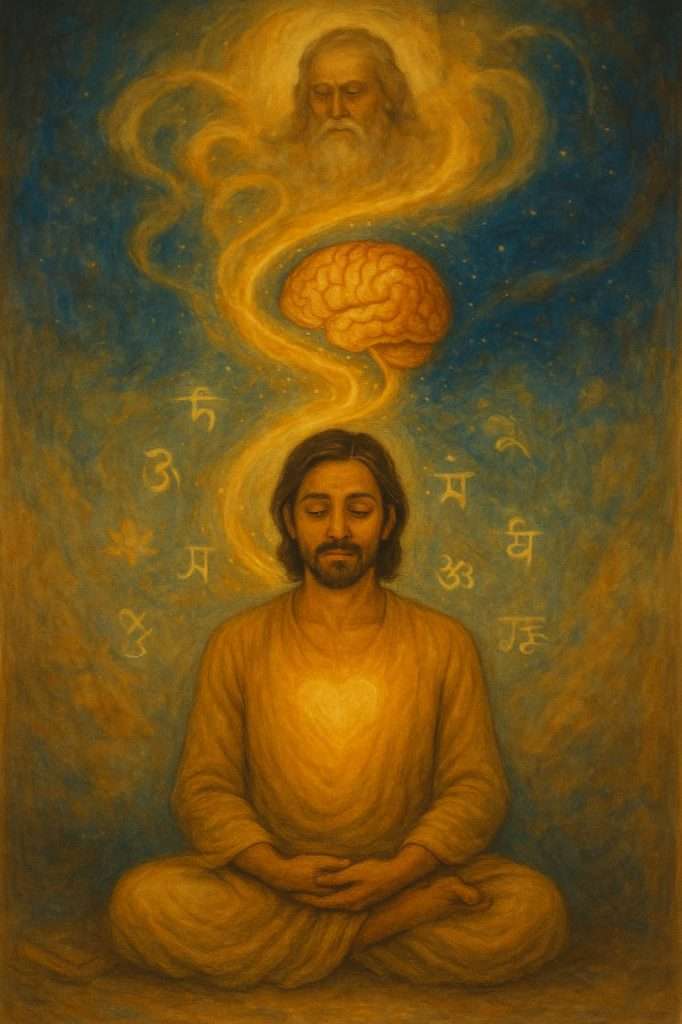
We often speak in terms like body, mind, soul, spirit, and brain, with their Indian counterparts being indriyam, manas, buddhi, and atma. These words are familiar, but their true meaning often remains elusive. My own journey to understand them has been filled with both clarity and confusion.
At one point, I believed everything was simply the work of the brain. Even the concept of mind, I thought, was nothing more than a useful illusion—a label for certain brain functions. I once used this illustration: although we refer to a color called sky blue, there is no blue sky—it only appears so. Likewise, though we speak of the mind, it has no independent reality. It never “minds” its own existence. What we call the mind, I believed, is simply a combination of the brain’s functions.
But this conviction began to shift recently when I listened to an interview with Dr. Michael Egnor, a neurosurgeon, who challenged the very foundation of such materialist views. In his conversation with Sean McDowell, Dr. Egnor discussed how the brain and even the mind have limits—and that some aspects of human experience arise from something beyond both. [https://youtu.be/YiWW-q_kpOI?si=xF2p-Yw1pP7Bk1z3]
Limits of the Brain: Neurosurgery Meets Philosophy
Dr. Egnor presented remarkable cases—like that of a girl who was born with only half her brain, yet grew up to be a bright and fully functioning adult. How could that be possible, if consciousness and reasoning were purely the product of brain structures?
He drew on classical philosophy, especially from Aquinas, to explain that every living being has a soul, but the human soul is unique—it is rational and spiritual, capable of abstract thought, moral judgment, and self-awareness. This rational soul, he argued, is immaterial and immortal. It survives the body.
He also pointed out that certain functions—like reasoning, reflection, and understanding—cannot be fully explained as outputs of physical processes. These go beyond what neurons and synapses can do.
My Creative Witness: Beyond Effort, Into Inspiration
This resonated deeply with me. As someone who has written over 2,000 poems, I know for a fact: no matter how hard I try, I cannot write even one meaningful poem by merely using my brain. I may press, analyze, or strategize—but unless something beyond me stirs, nothing flows. That something—inspiration, intuition, revelation—is not of the brain. It comes like a whisper from elsewhere.
Without that, I cannot write a poem, a thought, or even an article. Then what is the role of the brain? A facilitator, perhaps—but not the source.
Still Learning: Between Accent, Intellect, and Insight
To be honest, I didn’t understand everything Dr. Egnor said. His American accent and technical vocabulary made parts of the video difficult to follow. But one thing was crystal clear: the brain does not have the final say. Nor does what we commonly call mind. There is something more—something that cannot be reduced to chemistry or circuits.
This realization challenged me to reconsider my earlier views. And as I reflected on this new understanding, I wrote a poem this morning—a fresh expression of this awakening.
Closing Thought: A Journey Inward
We live in an age where artificial intelligence grows smarter and neuroscience delves deeper into the brain. But perhaps the most important discoveries still await us—not in the lab, but within.
The soul may not light up on a brain scan. The mind may never be located under a microscope. Yet the moment we stop reducing ourselves to flesh and electricity, we begin to see with a different eye.
Sometimes, that insight comes through a surgeon. Sometimes, through a poem. Often, through both.
Ashram, June 14, 2025
BT Song 1704 Beyond Brain
I did not worship You for Your own sake,
Nor did I give myself, wholly, for truth’s sake.
This mind slipped in between us two —
Its mischief, I know, is nothing new.
What else is there? I still don’t know,
What can replace this ceaseless flow.
You made the soul and gave me thought,
To help them both, a brain You brought.
To link them all, within the head,
A tiny sphere in the skull was spread.
One helps the other, but not for long —
Soon again, they pull wrong from wrong.
I do not know what’s going on,
No light has yet upon it shone.
Something is happening, this I sense —
But not its meaning, nor its tense.
The learned gave a thousand clues,
But nothing cut the inner noose.
Still I seek an answer bright,
When no one clears the veil of night.
Let things happen — what can I do?
Even if I knew, what use is the clue?
When none can hear, and none reply,
Even the last “why” floats in the sky.
Is it the soul, the brain, the mind, or life —
That stirs this storm, this inner strife?
Each opposes, then helps the other,
A house divided — self fights with brother.
Even if You speak, what can I be?
I fail to live what You show to me.
And so again I bow and pray,
You live for me — I see today.
Ashram, 14 June 2025, 5:30 AM
Song 1704 भक्ति गीत: मस्तिष्क से परे
दोहा
तुझको तेरे वास्ते ना, मैंने पूजा आज,
मुझको मैंने दे न सका, पूरा सच्चा ताज।
चौपाई
मन बीच में आ बैठा,
लीला इसकी सब देखा।
क्या विकल्प है इस पथ का,
समझ न पाया ये लेखा।
प्राण, बुद्धि, मस्तिष्क दिया,
साथ में आत्मा जो तुझसे लिया।
जोड़ सके ये सब भीतर,
मस्तक में गोला छोटा धर।
एक-दूजे को दे सहारा,
फिर भी चले विरोध पसारा।
क्या हो रहा है, कुछ न जानू,
उत्तर भी अब तक न मानू।
ज्ञानी बोले, शास्त्र सुनाए,
मन फिर भी अटक न पाए।
फिर भी खोजूं एक ही उत्तर,
साफ न बोले कोई भी मुखर।
क्या करूँ मैं, चलने दे खेला,
मिल भी जाए, क्या होगा झमेला?
कौन सुने, कौन दे उत्तर,
आख़िर में सब मौन की छतर।
बुद्धि, आत्मा, मान या प्राण,
नहीं हुआ अब तक पहचान।
मिलते हैं फिर भी लड़ते,
एक दूजे को ही मरोड़ते।
तू दे जवाब, क्या करूँ फिर,
तेरे मार्ग पे ना चल सकूँ निर।
फिर भी तुझको शीश नवाऊँ,
तू है मेरा — अब समझ पाऊँ।
श्लोक १
न त्वं त्वदर्थं पूजितो मया,
न च आत्मनं सम्पूर्णं समर्पितम्।
मध्ये प्रविष्टं मनः पुनः,
न ज्ञायते तस्य कृत्यम्॥
श्लोक २
किं विकल्पः इत्येव न अवगतम्,
ज्ञानं तव, आत्मा च निर्मिता।
तयोः सहाय्यं बुद्धिना कृतं,
तदपि सम्पूर्णं न स्फुटम्॥
श्लोक ३
मस्तिष्कमध्ये गोला स्थापिता,
तयोः मध्ये सम्बन्ध हेतु।
सहाय्यं कुर्युः एकं द्वितीयम्,
पुनः विरोधं सदा जनयन्ति॥
श्लोक ४
किं घटते इति न बोधः,
न च उत्तरं इदानीं लभ्यते।
किंचिदत्र घटते — इत्यस्ति,
परं तस्य स्वरूपं न दृश्यते॥
श्लोक ५
शतशः ज्ञैः व्याख्या दत्ता,
तथापि बुद्धिः न सञ्चरति।
तथापि अहम् उत्तरं इच्छामि,
यदा न कोऽपि स्पष्टं वदति॥
श्लोक ६
यत् घटते तदस्तु, अहं किं करोमि?
लभ्यते उत्तरं — किं तेन?
कः पृच्छति? कः उत्तरं ददाति?
शेषे अपि न किञ्चित् ज्ञायते॥
श्लोक ७
बुद्धिः, आत्मा, मानः वा प्राणः?
निश्चयः नास्ति मम अन्तरे।
सहकारिणः सन्ति च,
विरोधिनः अपि भवन्ति॥
श्लोक ८
यदि त्वं एव उत्तरं ददासि,
तदपि न शक्नोमि आचरितुम्।
तस्मात् त्वां पुनः नमामि,
त्वं मम कृते अस्ति — इति ज्ञानम्॥
Ashram, June 14, 2025, 5.30 am.
मस्तिष्क से परे: आत्मा, मन और न्यूरोसाइंस की सीमाओं पर एक काव्यात्मक मनन
हम अक्सर शरीर, मन, आत्मा, चेतना और मस्तिष्क जैसे शब्दों का प्रयोग करते हैं। इनके भारतीय समकक्ष हैं: इन्द्रियाँ, मन, बुद्धि और आत्मा। ये शब्द हमारे लिए परिचित तो हैं, पर इनका सच्चा अर्थ आज भी गूढ़ ही बना हुआ है। इन्हें समझने की मेरी यात्रा कभी स्पष्टता से भरी रही, तो कभी उलझनों से।
कभी मैं सोचता था कि जो कुछ भी है, सब मस्तिष्क का ही काम है। “मन” भी मेरे लिए केवल एक भ्रम था — मस्तिष्क के कुछ कार्यों को नाम देने का तरीका भर। जैसे हम कहते हैं “आकाश नीला है”, जबकि वास्तव में कोई नीला आकाश होता नहीं — वैसा ही कुछ। इस दृष्टिकोण से, मन की कोई स्वतंत्र सत्ता नहीं। वह कभी अपने अस्तित्व को लेकर “मनन” ही नहीं करता। मन सिर्फ मस्तिष्क की क्रियाओं का एक सम्मिलित नाम है — ऐसा मेरा विश्वास था।
लेकिन हाल ही में यह विश्वास डगमगाया जब मैंने न्यूरोसर्जन डॉ. माइकल एग्नर का एक इंटरव्यू सुना। वे शॉन मैक्डॉवेल के साथ बातचीत कर रहे थे, और उन्होंने भौतिकवादी सोच की जड़ों को ही चुनौती दी।
👉 वीडियो: https://youtu.be/YiWW-q_kpOI?si=xF2p-Yw1pP7Bk1z3
मस्तिष्क की सीमाएँ: जब शल्यचिकित्सा मिलती है दर्शन से
डॉ. एग्नर ने कुछ विलक्षण उदाहरण साझा किए — जैसे एक लड़की का मामला, जिसके मस्तिष्क का आधा हिस्सा जन्म से ही नहीं था, फिर भी वह एक बुद्धिमान और सामान्य जीवन जी रही थी। अगर चेतना केवल मस्तिष्क का उत्पाद है, तो यह कैसे संभव हुआ?
उन्होंने टॉमस एक्विनास जैसे शास्त्रीय दार्शनिकों का उल्लेख किया और कहा कि हर जीवधारी में आत्मा होती है, लेकिन मानव आत्मा विशिष्ट है — यह तार्किक और आध्यात्मिक है। यह अमूर्त और अमर होती है। शरीर के नाश के बाद भी यह जीवित रहती है।
उन्होंने यह भी स्पष्ट किया कि सोचना, मनन करना, और समझना — ये सब कार्य केवल भौतिक प्रक्रियाओं से नहीं समझाए जा सकते। मस्तिष्क की न्यूरॉन्स और सिनेप्स की सीमाएँ हैं — कुछ चीजें उनसे परे हैं।
मेरी रचनात्मक साक्षी: प्रयत्न से नहीं, प्रेरणा से
यह बात मेरे हृदय में गहराई से गूंज उठी। मैंने 2,000 से अधिक कविताएँ लिखी हैं — और मैं पूरे विश्वास से कह सकता हूँ: चाहे जितना भी प्रयास करूँ, केवल मस्तिष्क से कोई सार्थक कविता नहीं लिखी जा सकती। मैं विश्लेषण कर सकता हूँ, योजना बना सकता हूँ — लेकिन जब तक “कुछ और” भीतर नहीं जागता, कुछ भी नहीं बहता। वह “कुछ और” — प्रेरणा, अंतर्दृष्टि, या प्रकाश — मस्तिष्क से उत्पन्न नहीं होता। वह कहीं और से फुसफुसाकर आता है। बिना उसके, न कविता बनती है, न विचार, न लेख।
तो फिर मस्तिष्क की भूमिका क्या है? शायद एक सहायक की — पर स्रोत नहीं। अब भी सीख रहा हूँ: उच्चारण, बुद्धि और अन्तर्दृष्टि के बीच
सच कहूँ तो डॉ. एग्नर की सारी बातें मेरी समझ में नहीं आईं। उनका अमेरिकन उच्चारण और तकनीकी शब्दावली थोड़ी जटिल थी। पर एक बात पूरी तरह स्पष्ट हुई — मस्तिष्क अंतिम उत्तर नहीं है। “मन” भी नहीं।
कुछ और है — जो किसी रासायनिक प्रक्रिया या तारों के जोड़ से नहीं समझाया जा सकता। इस बोध ने मेरी पुरानी मान्यताओं को हिला दिया।
और इसी नए बोध के आलोक में मैंने आज सुबह एक कविता लिखी — इस जागरण की एक नई अभिव्यक्ति।
अंतिम विचार: एक आंतरिक यात्रा
हम ऐसे युग में जी रहे हैं जहाँ कृत्रिम बुद्धिमत्ता तीव्र गति से बढ़ रही है और न्यूरोसाइंस मस्तिष्क की गहराइयों में प्रवेश कर रही है।
लेकिन शायद सबसे गहरे सत्य न प्रयोगशालाओं में मिलेंगे — बल्कि हमारे भीतर।
आत्मा कभी ब्रेन स्कैन में नहीं दिखेगी। “मन” किसी माइक्रोस्कोप में नहीं मिलेगा। पर जिस क्षण हम खुद को केवल मांस और बिजली तक सीमित करना छोड़ देते हैं — हम एक नई दृष्टि से देखना शुरू करते हैं।
कभी वह दृष्टि एक सर्जन से मिलती है, कभी एक कविता से, अक्सर — दोनों से।
आश्रम, 14 जून 2025
Leave a Reply