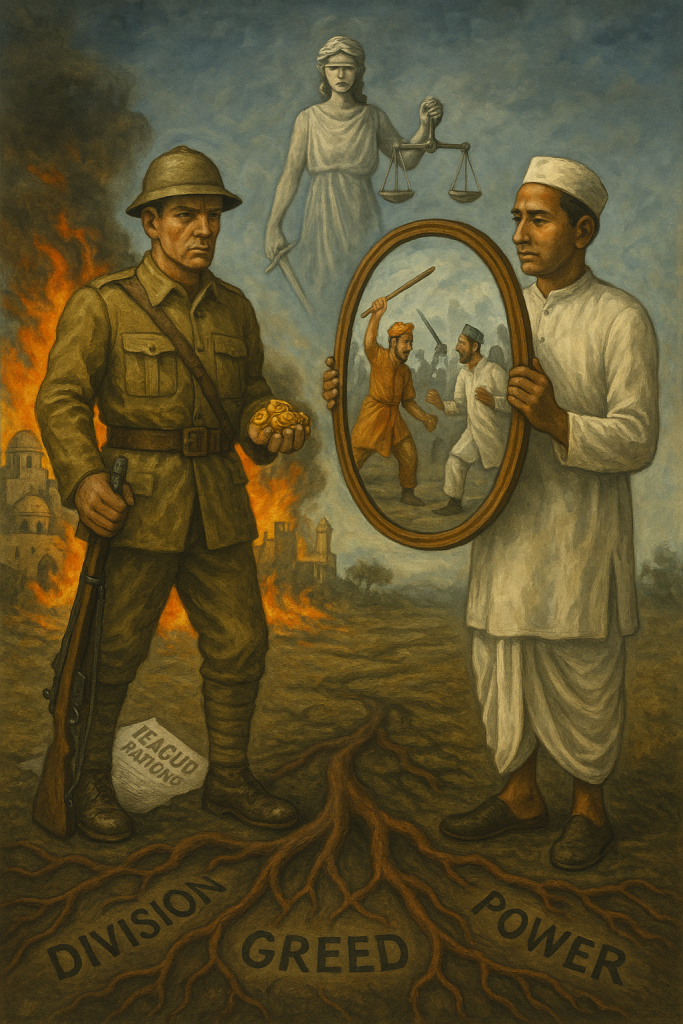
🔹Summary Thought of the Message (“Our Impotence” – Young India, 12-11-1925, CWMG, Vol. 28, pp. 440-442)
Gandhiji, in response to a passionate plea from Hakim Ajmal Khan and Dr. Ansari to condemn the French atrocities in Syria and appeal to the League of Nations, ultimately refused to send a formal cable in the name of the Indian National Congress. His refusal was not due to indifference, but stemmed from a deep recognition of India’s own moral and political impotence. He believed that to appeal without the moral strength of national unity—especially Hindu-Muslim unity—or the self-reliant power symbolized by spinning khadi, would be hypocritical and hollow.
Gandhiji emphasized that true solidarity with oppressed peoples (like the Druses in Syria) requires sacrifice, inner transformation, and national discipline. He pointed out that India was itself fractured by communal divisions and inaction, and therefore not in a moral position to speak to the world about justice. He saw no use in appealing to international bodies like the League of Nations,1 which he viewed as instruments of imperial powers such as Britain and France. Instead, he called Indians to self-awareness, honest self-assessment, and constructive national action. “Let us confess our littleness,” he wrote, “but we need not be little.”
Ashram, May 19, 2025
Notes
1And what is the League of Nations? Is it not in reality merely England and France? Do the other powers count? Is it any use appealing to France which is denying her motto of Fraternity, Equality and Justice? She has denied justice to Germany, there is little fraternity between her and the Riff’s, and the doctrine of equality she is trampling underfoot in Syria. If we would appeal to England, we need not go to the League of Nations. She is much nearer home. She is perched on the heights of Simla except when she descends to Delhi for a brief period. But to appeal to her is to appeal to Caesar against Augustus.—p. 442
When Faith Divides, Even God Steps Back
Reading Mahatmaji’s words in Young India—written a hundred years ago—I was quietly shaken by how little has changed. Back then, when France brutally suppressed the Syrian Druses—like so many colonial powers have done elsewhere—looting their gold and disregarding the League of Nations’ resolution that had granted Syria the right to democratic self-governance,2 Gandhiji was urged to issue a public condemnation. But he declined. Why? Because he saw with painful clarity that India, still deeply divided—especially between Hindus and Muslims—had no moral authority to speak to the world about justice.
That same insight applies painfully to us today. In post-Operation Sindhur India, after Pahalgam, and amid growing communal fault lines, many people remain conspicuously silent on humanitarian crises, especially those involving Palestine. Some are afraid of taking sides; others are indifferent. But beneath this silence is something deeper: a sense of moral defeat. We hesitate to speak because we know we are failing in our own backyards. Like in Gandhiji’s time, faith has become more about identity than about humanity. Religion now divides where it once sought to unite. And when faith divides, even God seems to step back.
Gandhiji’s refusal to speak against French atrocities was not cowardice; it was courage of a rarer kind—the courage to first accuse oneself. He believed, and lived by the principle, that we cannot correct others in areas where we ourselves are still failing. Until India had internal unity, especially spiritual unity, it had no business issuing moral statements to the world. He never used this self-examination as an excuse for silence, but as a call to deeper responsibility and transformation.
Compare this with today’s response to suffering. Many invoke karma not as a force of moral awakening but as a shield for inaction. “People reap what they sow,” we say, while avoiding any inward or outward engagement. But that’s not Gandhiji’s karma. For him, karma demanded self-purification, self-reliance, and service to others—not passive retreat.
The real tragedy today is not just that we are divided, but that we have become accustomed to our divisions. And so, like in Gandhiji’s day, we remain impotent—spiritually, morally, politically.
The Middle East burns. Our own society simmers. And we ask, “Is history repeating itself?”
Perhaps it isn’t repeating. Perhaps it never stopped. Some things don’t return in circles. They linger, unresolved, because we never face them with the honesty and courage Gandhiji called for.
That’s why I’ve shared only a summary of Gandhiji’s piece here. Those who wish to read the original can find it in Young India, 12-11-1925, CWMG, Vol. 28, pp. 440–442. What matters more is what we do with it—today.
Ashram, May 19, 2025
Notes
The French Government are also practising unfair and dishonest methods and are depleting the country of its wealth by removing all the gold in the country and replacing it by paper money. They are gradually undermining all the economic resources of the country which is resulting in destitution and poverty. To add to this depletion, they have also been collecting gold from the people of towns and villages in the shape of fines and punishments.—p. 441
Ashram, May 19, 2025
2 The French Government are also practising unfair and dishonest methods and are depleting the country of its wealth by removing all the gold in the country and replacing it by paper money. They are gradually undermining all the economic resources of the country which is resulting in destitution and poverty. To add to this depletion, they have also been collecting gold from the people of towns and villages in the shape of fines and punishments.—p. 441
Appendix
239. OUR IMPOTENCE
The following letter has been addressed to me by Hakim-
saheb Ajmal Khan and Dr. Ansari who have just returned from
a prolonged tour on the continent including Syria:
Recent events in Southern Syria, the country where the Druses live, and where an armed resistance is being carried on by these oppressed people against the French, the Mandatory Power, have brought to light the frightfulness of the French authorities there. A cable, received two days back from Palestine sent by Syed Jamaluddin-al-Husaini, Secretary of Lajnatut-Tanfiziyah, the most popular and influential organization of the people of Palestine, says that the town of Damascus has terribly suffered from the French bombardment and the death-roll has been tremendous.
Although from the various accounts published in the British Press one could gather that things were bad in Syria, yet this telegram from Pales- tine and Reuter’s cable from Cairo, received subsequently, show the utter barbarity and inhumanity which is being practised by the French on the population in the Druse country and Damascus.
Apart from the recent instances of frightfulness, our tour in Syria brought under our observation many facts which proved the callousness of the French and their utter disregard for the elementary rights of the people of the mandated territory in Syria.
We have already published our experiences in the Indian Press,
but in order to save you the trouble of reading the Urdu reports, ublished
in the Hamdard, we would briefly give you some of the most salient
facts regarding the situation in Syria.
When the League of Nations gave the mandate of Syria to France, the French Government and the High Commissioner made a public declaration to the people of Syria of granting them complete autonomy regarding their internal affairs. Syria was to be divided in several autonomous provinces each with a governor, elected by the people and an advisory council representing the people and elected by them. Whilst this promise was partially and outwardly carried out in the provinces of Lebanon and Damascus, the province of Hauran, the country of the Druses, was neither given autonomy nor a council for a president elected by them, but a French officer Captain Carbiollet, was forced on the Druses against their wish and when they made demonstrations and representations against this, their deputation was insulted, their notables were publicly thrashed and imprisoned, and their womenfolk were maltreated. (p.440)
Captain Carbiollet, who had come from French Congo, practised all the atrocities to which the poor inhabitants of the French Congo had been subjected by the French, but the Druses being an ancient, proud, warlike race resisted these methods and were forced to take up arms. They inflicted considerable losses on the French forces and have so far resisted the French invasion of their country successfully, but the methods practised by the French in the adjoining parts of Syria, viz., Damascus and Alleppo, are causing the spread of revolt to these parts. The telegrams quoted above refer to the most recent atrocities committed on the people of Damascus.
The French Government are also practising unfair and dishonest methods and are depleting the country of its wealth by removing all the gold in the country and replacing it by paper money. They are gradually undermining all the economic resources of the country which is resulting in destitution and poverty. To add to this depletion, they have also been collecting gold from the people of towns and villages in the shape of fines and punishments.
We are writing this to you in order to elicit your sympathy for these Asiatic brethren, and to request you, as the President of the Congress, to send a cable to the League of Nations which has granted this mandate to France, and to instruct other Congress organizations to do the same. We are conscious that the present situation in India is not very favourable to such an action, but it is our considered opinion as Indians, as Muslims, and as Asiatics that we should sympathize with all the oppressed Asiatic people and cultivate friendly relations with them which would be beneficial to us and to them.
I could not see my way to accept their advice to send a cable to the League of Nations in the name of the Congress, and therefore sent the following answer : 1
But the next best thing I could do was to publish the valuable letter and my reply. I do not believe in making appeals when there is no force behind them whether moral or material. Moral force comes from the determination of the appellants to do something, to sacrifice something for the sake of making their appeal effective. Even children instinctively know this elementary principle. They starve, they cry, or, if they are naughty, they do not hesitate to strike their mothers who will not grant their peremptory demands. Unless we recognize and are prepared to reduce to practice this principle we can but expose the Congress and ourselves to ridicule, if not worse. (p.441)
We cannot be naughty even if we will. We can suffer if only we will. I want us as Indians, Hindus or Mussalmans, Christians or Parsis, or Asiatics to realize our impotence in the face of this humiliation, barbarity, Dyerism, or call it what you will, inflicted on Syria. A definite realization of our impotence might teach us to imitate if it is only the animals who in the presence of stormy weather come close together and seek warmth and courage from one another. They do not make a vain appeal to the god of the weather to moderate his wrath. They simply provide against it.
And we? Hindus and Mussalmans fight against one another
and the gulf seems to be daily widening. We have not yet understood the meaning of the charkha. Those that have find all kinds of pretexts not to wear khaddar and not to spin. The storm is raging round us. And instead of seeking warmth one from the other, we prefer to shiver or petition the god of storms to stay his hand. If I cannot bring about Hindu-Muslim union or persuade the people to take up the wheel, I have the wisdom at least not to sign any petition for mercy.
And what is the League of Nations? Is it not in reality merely England and France? Do the other powers count? Is it any use appealing to France which is denying her motto of Fraternity, Equality and Justice? She has denied justice to Germany, there is little fraternity between her and the Riff’s, and the doctrine of equality she is trampling underfoot in Syria. If we would appeal to England, we need not go to the League of Nations. She is much nearer home. She is perched on the heights of Simla except when she descends to Delhi for a brief period. But to appeal to her is to appeal to Caesar against Augustus.
Let us then perceive the truth in its nakedness and learn to appeal to the nation to do her duty. Relief of Syria lies through India. And if we cannot appreciate our greatness, let us confess our littleness and say nothing. But we need not be little. Let us do at least one thing thoroughly — either fight to the bitter end, even as our brothers the four-footed animals often do, or, as men, let us learn and teach through co-operation on the largest scale known to the world the uselessness, nay, the sinfulness of exploitation of those weaker than ourselves. That co-operation among millions is possible only through the spinning-wheel.
1 Vide “Letter to Dr. M. A. Ansari”, 7-11-1925.
Young India, 12-11-1925, CWMG, vol. 28, 440 t0 442
🔹 संदेश का सार-विचार
(“हमारी निर्बलता” – यंग इंडिया, 12-11-1925, CWMG, खंड 28, पृष्ठ 440–442)
गांधीजी को हकीम अजमल खाँ और डॉ. अंसारी की ओर से एक भावुक अनुरोध प्राप्त हुआ, जिसमें फ्रांस द्वारा सीरिया में किए गए अत्याचारों की निंदा करने और लीग ऑफ नेशन्स से अपील करने की मांग की गई थी। परंतु गांधीजी ने अंततः भारतीय राष्ट्रीय कांग्रेस के नाम से कोई औपचारिक तार भेजने से इनकार कर दिया। उनका यह इनकार उदासीनता के कारण नहीं था, बल्कि भारत की अपनी नैतिक और राजनीतिक असमर्थता की गहरी पहचान से प्रेरित था।
उनका विश्वास था कि बिना राष्ट्रीय एकता—विशेष रूप से हिंदू-मुस्लिम एकता—के नैतिक बल के, या बिना खादी के सूत कातने जैसे आत्मनिर्भरता के प्रतीकों के, कोई भी अपील पाखंड और खोखली प्रतीत होगी।
गांधीजी ने बल दिया कि सीरिया के द्रूज़ों जैसे पीड़ित लोगों के साथ सच्ची एकजुटता केवल बलिदान, आंतरिक परिवर्तन और राष्ट्रीय अनुशासन के माध्यम से ही संभव है। उन्होंने स्पष्ट किया कि भारत स्वयं सांप्रदायिक विभाजनों और निष्क्रियता से जर्जर था, और इसीलिए वह नैतिक रूप से दुनिया के सामने न्याय की बात करने की स्थिति में नहीं था।
उन्होंने अंतरराष्ट्रीय संस्थाओं जैसे लीग ऑफ नेशन्स से अपील करने को व्यर्थ बताया, क्योंकि उनके अनुसार वे संस्थाएं ब्रिटेन और फ्रांस जैसी साम्राज्यवादी शक्तियों की कठपुतलियाँ थीं।1 इसके बजाय उन्होंने भारतीयों से आत्मचिंतन, ईमानदार आत्म-मूल्यांकन और रचनात्मक राष्ट्रीय कार्य की पुकार की। उन्होंने लिखा:
“आइए हम अपनी क्षुद्रता को स्वीकार करें—पर हमें क्षुद्र बने रहने की आवश्यकता नहीं है।”
आश्रम, 19 मई 2025
Notes
1And what is the League of Nations? Is it not in reality merely England and France? Do the other powers count? Is it any use appealing to France which is denying her motto of Fraternity, Equality and Justice? She has denied justice to Germany, there is little fraternity between her and the Riff’s, and the doctrine of equality she is trampling underfoot in Syria. If we would appeal to England, we need not go to the League of Nations. She is much nearer home. She is perched on the heights of Simla except when she descends to Delhi for a brief period. But to appeal to her is to appeal to Caesar against Augustus.—p. 442
जब आस्था बाँटती है, तब भगवान भी पीछे हट जाते हैं
क्या इतिहास स्वयं को दोहराता है – या फिर वह कभी रुका ही नहीं?
यंग इंडिया में महात्मा जी के सौ साल पुराने शब्दों को पढ़ते हुए मैं चुपचाप हिल गया—यह देखकर कि कितना कम बदला है। उस समय, जब फ्रांस ने सीरियन ड्रूज़ समुदाय पर बेरहमी से दमन किया—जैसा कि लगभग हर औपनिवेशिक शक्ति ने दुनिया भर में किया है—उन्होंने उनका सोना लूटा और राष्ट्र संघ द्वारा पारित उस प्रस्ताव की अवहेलना की,2 जिसमें सीरिया को लोकतांत्रिक तरीके से स्वयं शासन करने का अधिकार दिया गया था। उस समय गांधीजी से आग्रह किया गया कि वे इसकी सार्वजनिक रूप से निंदा करें। लेकिन उन्होंने इनकार कर दिया। क्यों? क्योंकि उन्होंने साफ़ देख लिया था कि भारत, जो अब भी आंतरिक विभाजनों—खासकर हिंदू और मुसलमानों के बीच—से जूझ रहा था, उसे दुनिया के सामने न्याय पर बोलने का नैतिक अधिकार नहीं था।
आज भी वही हाल है। ऑपरेशन सिंधूर के बाद, पहलगाम जैसी घटनाओं के बीच, और जब हमारे देश में साम्प्रदायिक तनाव लगातार गहराता जा रहा है, तब कई लोग फिलिस्तीन जैसी मानवीय त्रासदियों पर चुप हैं। कुछ डर के कारण, कुछ उदासीनता के कारण, और कुछ इसलिए कि वे भीतर से खुद को नैतिक रूप से असहाय महसूस करते हैं।
सच कहें तो, जैसे गांधीजी के समय में, आज भी आस्था अब पहचान बन गई है, करुणा नहीं। धर्म अब जोड़ने का माध्यम नहीं, तोड़ने का कारण बन गया है। और जब आस्था बाँटती है, तो भगवान भी जैसे चुप हो जाते हैं।
गांधीजी ने फ्रांसीसी अत्याचारों की निंदा करने से इनकार किया था, यह कायरता नहीं थी—यह एक दुर्लभ प्रकार का साहस था। पहले अपने आप को कठघरे में खड़ा करने का साहस। वे मानते थे कि जब तक हम स्वयं विफलताओं से नहीं उबरते, तब तक दूसरों को उपदेश देना पाखंड है। उनके लिए यह आत्म-समीक्षा कोई बहाना नहीं था, बल्कि एक गहरी ज़िम्मेदारी और आत्म-परिवर्तन की पुकार थी।
आज तो हम कर्म को भी एक बहाने के रूप में इस्तेमाल करते हैं—“जो किया है, वही भुगत रहे हैं”—यह कहकर हम न अपने भीतर झाँकते हैं, न बाहर मदद के लिए आगे आते हैं। लेकिन गांधीजी का कर्म यह नहीं था। उनके लिए कर्म का मतलब था आत्म–शुद्धि, आत्म–निर्भरता, और सेवा—न कि निष्क्रियता।
आज की सबसे बड़ी त्रासदी यह नहीं कि हम बँटे हुए हैं, बल्कि यह है कि हमने उस बँटवारे को स्वीकार कर लिया है। और इसीलिए, जैसे गांधीजी ने कहा था, हम आज भी आध्यात्मिक, नैतिक और राजनीतिक रूप से असहाय हैं।
मध्य-पूर्व जल रहा है। हमारा समाज भीतर से खौल रहा है। और हम पूछते हैं, “क्या इतिहास दोहराया जा रहा है?”
शायद वह दोहर नहीं रहा। शायद वह कभी रुका ही नहीं। कुछ चीजें चक्र में वापस नहीं आतीं। वे टिकी रहती हैं, क्योंकि हम उन्हें ईमानदारी से नहीं देखते।
इसीलिए मैंने यहाँ गांधीजी की बात का सार ही प्रस्तुत किया है। जो उनके मूल लेख को पढ़ना चाहें, वे Young India, 12-11-1925, CWMG, Vol. 28, pp. 440–442 देखें। लेकिन उससे भी ज़रूरी यह है कि हम आज क्या करते हैं।
Leave a Reply