Seeking Where We Lost: Between Sannyasis, Retreats, and Real-Life Responsibilities
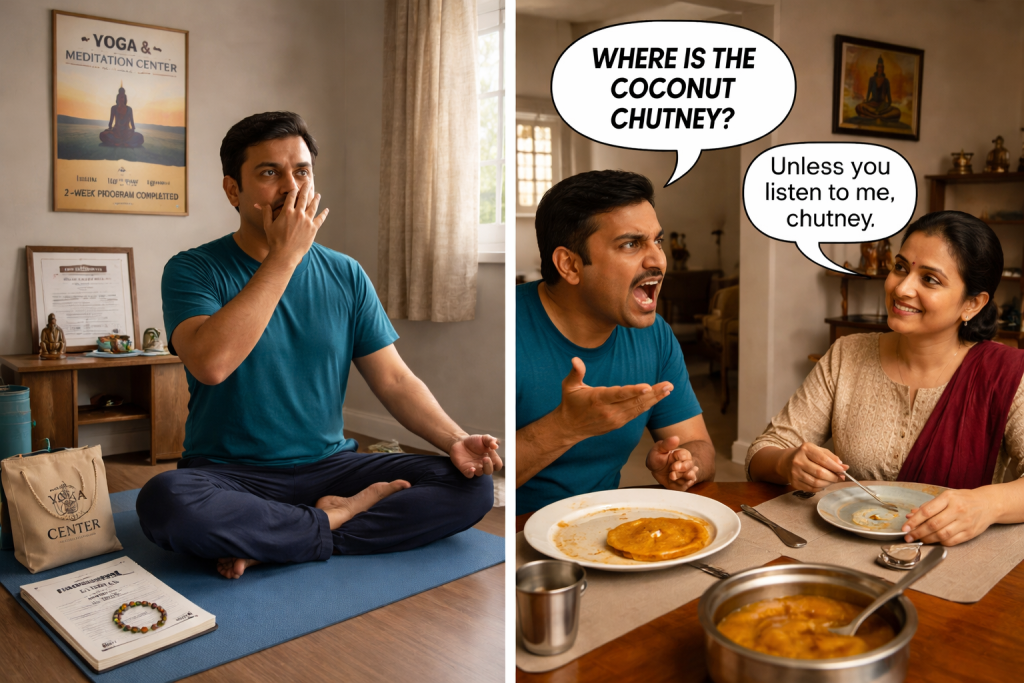
One time, a husband went to a yoga centre—highly recommended by a friend—to learn meditation and other techniques to reduce his stress. After completing a two-week program, and spending a considerable amount of money, he returned home determined to practise everything he had learned. He had been clearly told that unless he continued the practice, it would not work.
Two days later, he sat down for breakfast. His wife served idli with reheated sambar—but without his favourite coconut chutney. Upset, he immediately shouted, “Do you not know that I need coconut chutney more than sambar for idli?”
His wife responded calmly: “For the past one month, I have been telling you that the small mixie jar is not working. I asked you to repair it or buy a new one on your way from work. But instead of paying attention, you went to a yoga centre and spent time and money there. Now that you have learned the art of living, either eat without coconut chutney—or buy a new mixie jar.”
When I narrated this incident in one of my classes, a lady burst into laughter and said, “Swamiji, how do you know this is exactly what happened in our home?” I smiled and replied, “Because this is what is happening in most homes.”
The point is simple: seek where you have lost—not elsewhere. I am not against yoga, meditation, or wellness centres. They may offer useful tools. But most of our real-life problems arise from interpersonal relationships, and no external program can permanently resolve what is rooted there.
One person once shared with me his experience of attending Buddhist meditation classes, where he was trained to cultivate single-minded attention—mentally noting each act, such as “walking, walking,” or observing sensations without reacting. I could relate to this. At times, when I experience physical pain, I observe its origin and movement rather than resisting it. Such attention can reduce anxiety and bring a certain clarity.
These practices are valuable. They help us become aware of our mental patterns. Yet, the mind is not easily confined to a single stream. Even when we focus on one activity, it continues to function on multiple levels. The real challenge, therefore, is not in learning such techniques, but in sustaining them amidst the demands of daily life.
This raises an important concern. What is learned in short-term retreats—within controlled and distraction-free environments—does not easily translate into ordinary living. Our lives are shaped by relationships, responsibilities, and constant interaction. What works in isolation often becomes difficult in engagement.
This is not to dismiss such programs. Some do offer clarity and a temporary reset. But when they suggest lasting transformation within a short span, we must ask how much of that change can endure. Even in monastic life, inner stability comes from years of disciplined practice within a supportive structure. Expecting a householder to replicate that after a brief course is unrealistic.
We see the same pattern in wellness programs—whether for meditation, health, or weight management. Results may appear impressive in a controlled setting. But once back home, without the same structure, sustaining those results becomes difficult. One person shared that after a forty-day program, he lost weight and felt better—but within six months, he gained even more than before. The issue is not that the method is false, but that it depends on conditions that are not easily sustained.
This brings us back to the central issue: we often seek solutions away from the very place where problems arise. Instead of engaging with our relationships and responsibilities, we look for answers in isolation. We also tend to seek guidance that relieves us of responsibility, rather than helping us engage with it more consciously.
As it is often said, “seek where you have lost.” If the disturbance is in relationships, the solution must also begin there.
Today, there is a growing tendency to avoid difficult conversations—advising silence instead of engagement. While silence may help temporarily, it cannot resolve underlying tensions. When communication is avoided, unresolved emotions accumulate and may surface later in unexpected ways.
The real need is not merely to “sit and talk,” but to learn to listen—with patience and openness. In most relationships, this is where the difficulty lies. Even while listening, we often select only what supports our own position, rather than understanding the other.
At the same time, this kind of listening is different from formal “dialogue” used in public or ideological contexts. Interpersonal relationships require a more personal and inwardly attentive engagement.
In situations of deeper distress, seeking a trained counsellor can be helpful—especially someone equipped to understand relational dynamics. Most of our struggles are not isolated; they involve others, and therefore require relational clarity.
Even in health matters, the same principle applies. Structured programs can initiate change, but sustaining it requires integration into daily life. Without that, even small disruptions can undo progress. As Mahatma Gandhi observed in his own dietary experiments, the body does not always respond well to sudden changes, especially when it has long been conditioned otherwise.
Similarly, modern medical treatments for weight loss may offer support, but they require supervision and careful integration into one’s lifestyle. No method, however effective, can replace the need for long-term adaptation.
These reflections are not meant to dismiss all such efforts, but to question our expectation of quick solutions to complex, long-standing problems.
Often, people ask whether I offer counselling. I do engage in conversation, but I do not claim to provide ready-made solutions. A sannyasi may offer perspective, but cannot fully grasp the practical complexities of another’s life. What cannot be learned within one’s own family and relationships cannot be outsourced to someone living outside those responsibilities.
Our tradition itself acknowledges that some aspects of life can only be understood through lived experience.
In the end, after all discussions, the conclusion often returns to a simple truth: “Adjust madi beku”—one must learn to adjust.
This is not resignation, but a conscious and responsible engagement with life. It calls for patience, flexibility, and maturity.
Most of our difficulties arise from relationships. And while no single formula can resolve them, the willingness to understand, adapt, and respond wisely remains essential.
Otherwise, we will continue seeking solutions elsewhere—while the real work waits where we actually lost.
Ashram, March 23, 2026
अब नारियल चटनी नहीं—जब तक आप सुनना न सीखें:जहाँ खोया है, वहीं खोजें: संन्यासियों, रिट्रीट्स और वास्तविक जीवन की जिम्मेदारियों के बीच
एक बार एक व्यक्ति अपने मित्र की सलाह पर एक योग केंद्र गया, ताकि ध्यान और अन्य योग तकनीकों को सीखकर अपना तनाव कम कर सके। दो सप्ताह का कार्यक्रम पूरा करने और अच्छी-खासी राशि खर्च करने के बाद वह घर लौटा, यह निश्चय करके कि वह सीखी हुई सभी बातों का अभ्यास करेगा। उसे स्पष्ट रूप से बताया गया था कि यदि वह अभ्यास जारी नहीं रखेगा, तो इसका कोई लाभ नहीं होगा।
दो दिन बाद, वह नाश्ते के लिए बैठा। उसकी पत्नी ने इडली के साथ पिछले दिन का गरम किया हुआ सांभर परोसा—लेकिन उसकी पसंदीदा नारियल चटनी नहीं थी। वह तुरंत नाराज़ होकर बोला, “क्या तुम्हें नहीं पता कि मुझे इडली के साथ सांभर से ज्यादा नारियल चटनी चाहिए?”
उसकी पत्नी ने शांत भाव से उत्तर दिया: “पिछले एक महीने से मैं तुम्हें बता रही हूँ कि मिक्सी का छोटा जार काम नहीं कर रहा है। मैंने तुमसे कहा था कि रास्ते में उसे ठीक करवा दो या नया ले आओ। लेकिन ध्यान देने के बजाय तुम योग केंद्र चले गए और वहाँ समय और पैसा खर्च किया। अब जब तुमने जीवन जीने की कला सीख ली है, तो या तो बिना चटनी के खाओ—या नया मिक्सी जार खरीदो।”
जब मैंने यह घटना अपनी एक कक्षा में सुनाई, तो एक महिला हँसते हुए बोली, “स्वामीजी, आपको कैसे पता कि यही हमारे घर में भी हुआ है?” मैंने मुस्कुराते हुए कहा, “क्योंकि यही अधिकांश घरों में हो रहा है।”
संदेश सरल है: जहाँ खोया है, वहीं खोजो—कहीं और नहीं। मैं योग, ध्यान या वेलनेस केंद्रों के विरुद्ध नहीं हूँ। वे उपयोगी साधन दे सकते हैं। लेकिन हमारे अधिकांश वास्तविक जीवन के समस्याएँ पारस्परिक संबंधों से उत्पन्न होती हैं, और कोई बाहरी कार्यक्रम उन्हें स्थायी रूप से हल नहीं कर सकता।
एक व्यक्ति ने मुझसे बौद्ध ध्यान कक्षाओं का अपना अनुभव साझा किया, जहाँ उसे एकाग्रता विकसित करने का अभ्यास कराया गया—हर क्रिया को मन ही मन दोहराते हुए, जैसे “चलना, चलना,” या बिना प्रतिक्रिया दिए संवेदनाओं को देखना। मैं इससे जुड़ पाया। कभी-कभी जब मुझे शारीरिक पीड़ा होती है, तो मैं उसके उत्पत्ति और गति को देखता हूँ, उससे लड़ता नहीं। इससे चिंता कम होती है और एक प्रकार की स्पष्टता आती है।
ऐसे अभ्यास मूल्यवान हैं। वे हमें अपने मानसिक पैटर्न को समझने में मदद करते हैं। फिर भी, मन को एक ही धारा में बाँधना आसान नहीं है। जब हम एक कार्य पर ध्यान केंद्रित करते हैं, तब भी वह कई स्तरों पर सक्रिय रहता है। इसलिए वास्तविक चुनौती इन्हें सीखने में नहीं, बल्कि दैनिक जीवन की मांगों के बीच इन्हें बनाए रखने में है।
यहीं एक महत्वपूर्ण प्रश्न उठता है। अल्पकालिक रिट्रीट्स में—जहाँ वातावरण नियंत्रित और विकर्षण-रहित होता है—जो सीखा जाता है, वह सामान्य जीवन में आसानी से लागू नहीं होता। हमारा जीवन संबंधों, जिम्मेदारियों और निरंतर सहभागिता से बना है। जो एकांत में काम करता है, वह व्यवहार में कठिन हो जाता है।
यह कहना नहीं है कि ऐसे कार्यक्रम निरर्थक हैं। कुछ वास्तव में स्पष्टता और अस्थायी राहत देते हैं। लेकिन जब वे कम समय में स्थायी परिवर्तन का संकेत देते हैं, तो यह पूछना आवश्यक है कि वह परिवर्तन कितना टिकेगा। संन्यासी जीवन में भी आंतरिक स्थिरता वर्षों के अनुशासित अभ्यास से आती है। एक गृहस्थ से यह अपेक्षा करना कि वह एक छोटे कोर्स के बाद वही बनाए रख सके, यथार्थवादी नहीं है।
वेलनेस कार्यक्रमों में भी यही पैटर्न दिखाई देता है—चाहे वह ध्यान हो, स्वास्थ्य या वजन प्रबंधन। नियंत्रित वातावरण में परिणाम अच्छे दिख सकते हैं। लेकिन घर लौटने पर, उसी संरचना के अभाव में, उन्हें बनाए रखना कठिन हो जाता है। एक व्यक्ति ने बताया कि चालीस दिन के कार्यक्रम के बाद उसका वजन कम हुआ और वह बेहतर महसूस कर रहा था, लेकिन छह महीने में उसका वजन पहले से भी अधिक बढ़ गया। समस्या विधि में नहीं, बल्कि उसकी स्थिरता में है।
यह हमें मूल प्रश्न पर वापस लाता है: हम अक्सर समाधान वहाँ खोजते हैं जहाँ समस्या है ही नहीं। अपने संबंधों और जिम्मेदारियों का सामना करने के बजाय, हम अलग-थलग जगहों में उत्तर ढूँढते हैं। हम ऐसा मार्गदर्शन भी चाहते हैं जो हमें जिम्मेदारी से मुक्त करे, न कि हमें उसके प्रति अधिक सजग बनाए।
जैसा कहा जाता है, “जहाँ खोया है, वहीं खोजो।” यदि समस्या संबंधों में है, तो समाधान भी वहीं से शुरू होना चाहिए।
आजकल एक प्रवृत्ति यह भी है कि कठिन बातचीत से बचा जाए—चुप रहने की सलाह दी जाती है। कुछ समय के लिए यह सहायक हो सकता है, लेकिन यह स्थायी समाधान नहीं है। संवाद से बचने पर भावनाएँ भीतर जमा होती रहती हैं और बाद में अप्रत्याशित रूप से बाहर आ सकती हैं।
इसलिए आवश्यकता केवल “बैठकर बात करने” की नहीं, बल्कि सुनने की कला सीखने की है—धैर्य और खुलेपन के साथ। अधिकांश संबंधों में यही सबसे बड़ी चुनौती है। लोग सुनते तो हैं, लेकिन केवल वही चुनते हैं जो उनके पक्ष को मजबूत करे।
यह सुनना औपचारिक “संवाद” से अलग है, जो अक्सर सार्वजनिक या वैचारिक मुद्दों पर होता है। पारस्परिक संबंधों में अधिक व्यक्तिगत और भीतर से जुड़ी हुई सहभागिता की आवश्यकता होती है।
गंभीर स्थितियों में, एक प्रशिक्षित परामर्शदाता की सहायता लेना उपयोगी हो सकता है—विशेषकर वह जो संबंधों की जटिलताओं को समझ सके। हमारी अधिकांश समस्याएँ दूसरों से जुड़ी होती हैं, इसलिए उनके समाधान में भी संबंधों की स्पष्टता आवश्यक है।
स्वास्थ्य के क्षेत्र में भी यही सिद्धांत लागू होता है। कोई कार्यक्रम परिवर्तन की शुरुआत कर सकता है, लेकिन उसे बनाए रखने के लिए उसे जीवन में समाहित करना आवश्यक है। महात्मा गांधी ने भी अपने आहार प्रयोगों में देखा कि शरीर अचानक परिवर्तन को सहजता से स्वीकार नहीं करता।
इसी प्रकार, आधुनिक दवाएँ भी सहायता कर सकती हैं, लेकिन उन्हें सावधानी और जीवनशैली में संतुलन के साथ अपनाना आवश्यक है। कोई भी उपाय दीर्घकालिक अनुकूलन का स्थान नहीं ले सकता।
ये विचार किसी प्रयास को नकारने के लिए नहीं हैं, बल्कि इस अपेक्षा पर प्रश्न उठाने के लिए हैं कि जटिल समस्याओं का त्वरित समाधान संभव है।
अक्सर लोग पूछते हैं कि क्या मैं परामर्श देता हूँ। मैं संवाद करता हूँ, परंतु तैयार समाधान देने का दावा नहीं करता। एक संन्यासी दृष्टिकोण दे सकता है, लेकिन किसी के जीवन की जटिलताओं को पूरी तरह नहीं जी सकता।
हमारी परंपरा भी यह स्वीकार करती है कि जीवन के कुछ पहलू केवल अनुभव से ही समझे जा सकते हैं।
अंततः, सभी चर्चाओं के बाद निष्कर्ष अक्सर एक सरल सत्य पर लौटता है: “एडजस्ट करना पड़ेगा।”
यह हार मानना नहीं है, बल्कि जीवन के प्रति एक सजग और जिम्मेदार दृष्टिकोण है—जिसमें धैर्य, लचीलापन और परिपक्वता आवश्यक है।
हमारी अधिकांश समस्याएँ संबंधों से जुड़ी होती हैं। और उनका समाधान किसी एक सूत्र में नहीं, बल्कि समझ, अनुकूलन और परिपक्व प्रतिक्रिया में निहित है।
अन्यथा, हम समाधान कहीं और खोजते रहेंगे—जबकि वास्तविक काम वहीं हमारा इंतजार कर रहा है, जहाँ हमने उसे खोया था।
आश्रम, 23 मार्च 2026
இனி தேங்காய் சட்னி இல்லை
நீங்கள் கேட்கக் கற்றுக்கொள்ளாத வரை
நாம் இழந்த இடத்திலேயே தேடுதல்: சந்நியாசிகள், ரிட்ரீட்கள், மற்றும் நிஜ வாழ்க்கை பொறுப்புகளுக்கிடையில்
ஒரு முறை, ஒரு கணவன் தனது நண்பரின் பரிந்துரையின்பேரில் ஒரு யோகா மையத்திற்கு சென்றார். தனது மன அழுத்தத்தை குறைக்க தியானம் மற்றும் பிற யோக முறைகளை கற்க வேண்டும் என்பதற்காக. இரண்டு வார பயிற்சியை முடித்து, கணிசமான தொகை பணம் செலவழித்து, அவர் வீட்டிற்கு திரும்பினார். கற்றதை தொடர்ந்து பயிற்சி செய்யாவிட்டால் அதற்கு பயன் இருக்காது என்று அவருக்கு தெளிவாக சொல்லப்பட்டிருந்தது.
இரண்டு நாட்களுக்கு பிறகு, அவர் காலை உணவிற்காக அமர்ந்தார். அவரது மனைவி இட்லியுடன் முந்தைய நாள் சாம்பாரை சூடாக்கி வைத்திருந்தார்—ஆனால் அவர் மிகவும் விரும்பும் தேங்காய் சட்னி இல்லை. உடனே அவர் கோபமாக, “இட்லிக்கு சாம்பாரை விட எனக்கு தேங்காய் சட்னிதான் முக்கியம் என்று உனக்குத் தெரியாதா?” என்று கேட்டார்.
அவரது மனைவி அமைதியாகப் பதிலளித்தார்: “கடந்த ஒரு மாதமாக நான் சொல்லிக்கொண்டிருக்கிறேன்—மிக்ஸியின் சிறிய ஜார் வேலை செய்யவில்லை என்று. அதை சரி செய்யவோ அல்லது வேலை முடிந்து வரும் வழியில் புதியதை வாங்கிக்கொண்டு வரவோ நான் உன்னிடம் கேட்டேன். ஆனால் அதற்கு கவனம் செலுத்தாமல் நீ யோகா மையத்திற்குச் சென்று நேரமும் பணமும் செலவழித்தாய். இப்போது நீ வாழ்க்கை வாழும் கலையை கற்றுக்கொண்டாயே—அப்படியானால் சட்னி இல்லாமல் சாப்பிடு, இல்லையெனில் புதிய மிக்ஸி ஜார் வாங்கிக்கொண்டு வா.”
இந்த நிகழ்வை நான் என் வகுப்பில் கூறியபோது, ஒரு பெண் சிரித்துக்கொண்டே, “ஸ்வாமிஜி, இது எங்கள் வீட்டிலேயே நடந்தது போல உங்களுக்கு எப்படி தெரியும்?” என்று கேட்டார். நான் சிரித்துக்கொண்டு, “இது பெரும்பாலான வீடுகளில் நடப்பதுதான்” என்று பதிலளித்தேன்.
இதன் கருத்து எளிமையானது: நாம் இழந்த இடத்திலேயே தேட வேண்டும்—வேறு எங்கும் அல்ல. யோகா, தியானம் அல்லது நல மையங்களுக்கு நான் எதிரானவன் அல்ல. அவை பயனுள்ள பயிற்சிகளை வழங்கலாம். ஆனால் நம்முடைய வாழ்க்கைச் சிக்கல்களில் பெரும்பாலானவை உறவுகளிலிருந்தே உருவாகின்றன; அவற்றை வெளிப்புறப் பயிற்சிகள் நிரந்தரமாக தீர்க்க முடியாது.
ஒருவர் ஒருமுறை பௌத்த தியான வகுப்பில் கலந்து கொண்ட அனுபவத்தை எனக்குப் பகிர்ந்தார். அங்கு ஒவ்வொரு செயலும் “நடக்கிறேன், நடக்கிறேன்” என்று மனதில் குறித்துக் கொண்டு, உடலில் ஏற்படும் உணர்வுகளை எதிர்வினையின்றி கவனிக்கும் பயிற்சி கற்றுக்கொடுக்கப்பட்டது. இது எனக்கும் தொடர்புடையதாக தோன்றியது. சில சமயங்களில் உடல் வலி ஏற்பட்டால், அதை எதிர்த்து போராடாமல், அதன் தோற்றம் மற்றும் இயக்கத்தை கவனிக்கிறேன். இது கவலையை குறைத்து தெளிவை அளிக்கிறது.
இத்தகைய பயிற்சிகள் மதிப்புடையவை. அவை நம்முடைய மனப்போக்குகளை புரிந்துகொள்ள உதவுகின்றன. ஆனால் மனம் ஒரே ஓட்டத்தில் இயங்குவதில்லை. நாம் ஒரு செயலில் கவனம் செலுத்தினாலும், அது பல நிலைகளில் இயங்கிக்கொண்டே இருக்கும். எனவே உண்மையான சவால், இந்த முறைகளை கற்றுக்கொள்வதில் அல்ல—அவற்றை அன்றாட வாழ்க்கையில் நிலைநிறுத்துவதில்தான் உள்ளது.
இதிலிருந்து ஒரு முக்கியமான கேள்வி எழுகிறது. குறுகிய கால ரிட்ரீட்களில்—அமைதியான, கட்டுப்படுத்தப்பட்ட சூழலில்—கற்றுக்கொள்ளப்படுவது, சாதாரண வாழ்க்கையில் எளிதில் செயல்படுவதில்லை. நம் வாழ்க்கை உறவுகள், பொறுப்புகள் மற்றும் தொடர்ச்சியான தொடர்புகளால் வடிவமைக்கப்பட்டுள்ளது. தனிமையில் வேலை செய்பவை, உறவுகளில் சிரமமாகின்றன.
இதனால் இத்தகைய மையங்களை முழுவதும் மறுப்பதில்லை. சில மையங்கள் தெளிவையும் தற்காலிக ஓய்வையும் அளிக்கலாம். ஆனால் குறுகிய காலத்தில் நிலையான மாற்றத்தை வாக்குறுதி அளிக்கும்போது, அது எவ்வளவு நீடிக்கும் என்று கேட்க வேண்டும். சந்நியாச வாழ்க்கையிலும் உள்ளார்ந்த நிலைத்தன்மை ஆண்டுகளாகும் ஒழுங்கான பயிற்சியால் தான் கிடைக்கிறது. ஒரு குடும்பஸ்தர் அதை குறுகிய காலத்தில் அடைவது சாத்தியமில்லை.
நலவாழ்வு மையங்களிலும் இதே நிலை. கட்டுப்படுத்தப்பட்ட சூழலில் நல்ல விளைவுகள் கிடைக்கலாம். ஆனால் வீட்டிற்கு திரும்பியபின் அவற்றை நிலைநிறுத்துவது கடினம். ஒருவரின் அனுபவத்தில், நாற்பது நாள் பயிற்சிக்குப் பிறகு உடல் எடை குறைந்தது, ஆனால் ஆறு மாதங்களில் அது மீண்டும் அதிகரித்தது. பிரச்சினை முறையில் இல்லை; அதை நிலைநிறுத்தும் சூழலில் தான் உள்ளது.
இதனால் நாம் அடையும் உண்மை: நம்முடைய பிரச்சினைகள் உருவாகும் இடத்திலிருந்து விலகி நாம் தீர்வுகளைத் தேடுகிறோம். உறவுகளையும் பொறுப்புகளையும் நேரடியாக எதிர்கொள்ளாமல், தனிமையில் பதில்களைத் தேடுகிறோம்.
“நாம் இழந்த இடத்திலேயே தேட வேண்டும்.” பிரச்சினை உறவுகளில் இருந்தால், தீர்வும் அங்கேயே தொடங்க வேண்டும்.
இப்போது கடினமான உரையாடல்களைத் தவிர்க்கும் பழக்கம் அதிகரித்துள்ளது. சில நேரங்களில் அமைதி உதவலாம்; ஆனால் அது நிரந்தரத் தீர்வல்ல. பேசாமல் இருப்பதால் மனக்கசப்புகள் சேர்ந்து, பின்னர் வெடிக்கக்கூடும்.
எனவே “பேசுவது” மட்டுமல்ல, “கேட்பதை கற்றுக்கொள்ளுதல்” அவசியம். பல உறவுகளில் இதுவே சிக்கல். கேட்கும் போதும், நாம் நமக்கு சாதகமானவற்றை மட்டும் தேர்ந்தெடுக்கிறோம்.
இந்தக் கேட்பு, பொதுவான விவாதங்களில் காணப்படும் உரையாடல்களிலிருந்து மாறுபட்டது. உறவுகள் அதிகமான உள்ளார்ந்த கவனத்தையும் தனிப்பட்ட ஈடுபாட்டையும் தேவைப்படுத்துகின்றன.
சில நேரங்களில், பயிற்சி பெற்ற ஆலோசகரின் உதவியும் பயனுள்ளதாக இருக்கலாம்—குறிப்பாக உறவுகளைப் புரிந்துகொள்ள. நமது பிரச்சினைகள் பெரும்பாலும் தனிப்பட்டவை அல்ல; அவை பிறருடன் தொடர்புடையவை.
உடல்நலத்திலும் இதே கோட்பாடு பொருந்தும். மாற்றத்தை ஆரம்பிக்கலாம்; ஆனால் அதை நிலைநிறுத்த வாழ்க்கையுடன் ஒருங்கிணைக்க வேண்டும். மகாத்மா காந்தியும் தன் உணவுப் பரிசோதனைகளில் இதையே கவனித்தார்—உடல் திடீர் மாற்றங்களை எளிதில் ஏற்காது.
அதேபோல், நவீன மருந்துகள் உதவியாக இருக்கலாம்; ஆனால் அவையும் வாழ்க்கை முறையுடன் இணைந்து மட்டுமே பயன் தரும்.
இந்த எண்ணங்கள் முயற்சிகளை மறுப்பதற்கல்ல, ஆனால் சிக்கலான பிரச்சினைகளுக்கு விரைவான தீர்வு எதிர்பார்ப்பதை கேள்விக்குள்ளாக்குவதற்காக.
அடிக்கடி மக்கள் என்னிடம் ஆலோசனை கேட்கிறார்கள். நான் உரையாடுகிறேன், ஆனால் தயாரான தீர்வுகளை வழங்குவதாகக் கூறவில்லை. ஒரு சந்நியாசி பார்வையை வழங்கலாம்; ஆனால் வாழ்க்கையின் சிக்கல்களை முழுமையாக அனுபவிக்க முடியாது.
நம் பாரம்பரியமும் சில விஷயங்கள் அனுபவத்தால் மட்டுமே புரிந்துகொள்ளப்படுகின்றன என்பதை ஒப்புக்கொள்கிறது.
இறுதியில், அனைத்து உரையாடல்களின் முடிவும் ஒரு எளிய உண்மைக்குத் திரும்புகிறது: “சமரசம் செய்ய வேண்டும்.”
இது சரணடைதல் அல்ல; இது பொறுப்புடன் வாழ்க்கையை அணுகுவது. அதற்கு பொறுமை, தழுவும் திறன் மற்றும் முதிர்ச்சி தேவை.
நமது பெரும்பாலான சிக்கல்கள் உறவுகளிலிருந்து வருகின்றன. அவற்றை தீர்ப்பதற்கு ஒரு முறை இல்லை; ஆனால் புரிதல், ஏற்றுக்கொள்ளுதல், மற்றும் நிதானமான பதில் அவசியம்.
இல்லையெனில், நாம் தொடர்ந்து வேறு இடங்களில் தீர்வுகளைத் தேடிக்கொண்டே இருப்போம்—நாம் உண்மையில் இழந்த இடத்திலேயே தீர்வு காத்திருக்கும்போது.
ஆசிரமம், மார்ச் 23, 2026
Leave a Reply