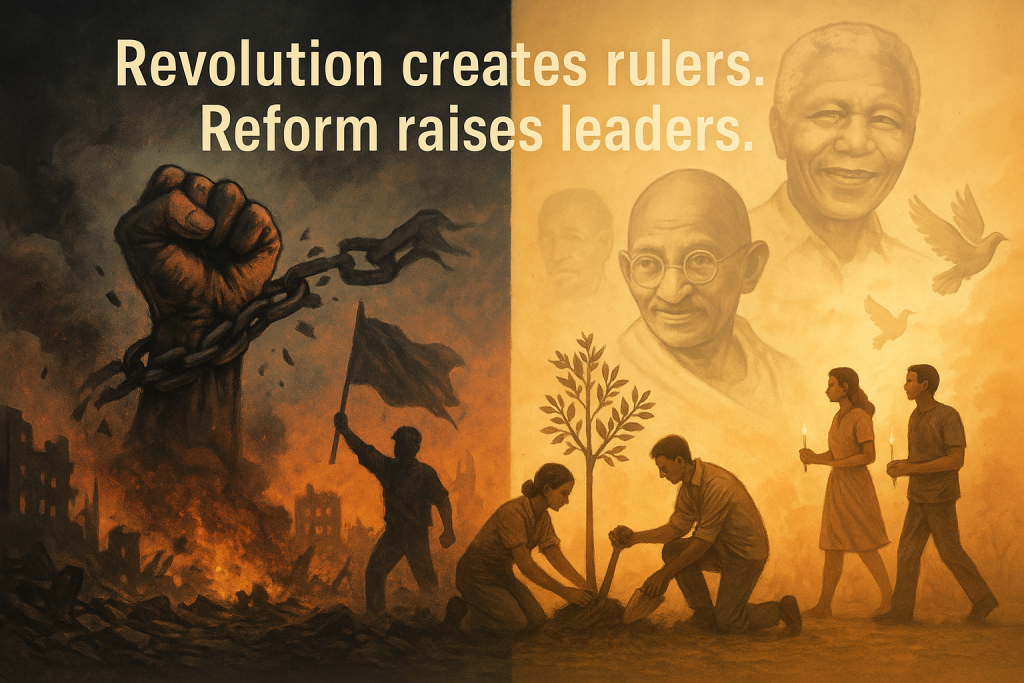
“Oppression is wrong because it suppresses people, whereas revolution is self-defence.” This was the essence of a message I recently received. It’s a popular view—and one that feels morally justified at first glance. But the reality is far more complex.
Oppression and revolution are not true opposites. They are two sides of the same coin—locked in a cycle where one gives birth to the other. Oppression may indeed provoke revolution, but more often than not, the revolution ends up mirroring the very injustice it rose against. The new regime, born in violence, tends to become more rigid, intolerant, and brutal. Ironically, the original oppression may have at least allowed room for dissent—something that revolutionary regimes, once in power, tend to extinguish completely.
Why? Because those who come to power through violence often fear that same force turning against them. Having relied on force as their tool and ideology, they suppress any internal challenge mercilessly. Dissent becomes treason. Authority is centralized in the hands of one individual or a small elite. And the tools of liberation become instruments of fear.
History offers sobering examples. From Stalin’s Soviet Union to Mao’s China, from Pol Pot’s Cambodia to Castro’s Cuba, and in North Korea even today, revolutions that began with promises of justice and freedom descended into decades of oppression. When the people finally rise again, it is often to tear down the symbols of these failed revolutions—Saddam Hussein’s statue, the crumbling cults of Stalin, or recent uprisings in Syria.
And yet, in the midst of this cycle, there are rare but powerful exceptions. Nelson Mandela is one such figure. While he once accepted the necessity of violent resistance, his long years in prison transformed him. When he emerged, he led not with vengeance, but with reconciliation. He turned from a revolutionary into a reformer and helped usher in a democratic South Africa. Contrast this with Mahatma Gandhi, who never wavered in his commitment to nonviolence. But Mandela’s journey is all the more remarkable—because he changed. His life shows that even those who once believed in armed struggle can become agents of peace, and true reform.
Catchy slogans and clever wordplay—what we call Varthai Jaalam [வார்தை ஜாலம்] in Tamil or Pushpitam Vacham in Sanskrit (flowery speech)—may stir the heart, but they often hide the deeper pain of failed revolutions. Instead of glorifying violence in the name of justice, let us ask: what practical steps are we taking to bring true and lasting freedom to the oppressed?
Revolution is not the path to that liberation. Reform is. And it must begin within us—through humility, compassion, and the courage to change ourselves first. No lasting peace is built on the barrel of a gun. Those who live by the sword will perish by it.
Let us not flip the coin endlessly between oppression and revolution. Let us break the cycle—and choose a better way.
Ashram, June 18, 2025
दमन और क्रांति: एक ही सिक्के के दो पहलू
“दमन ग़लत है क्योंकि यह लोगों को दबाता है, जबकि क्रांति आत्म-रक्षा है।” हाल ही में मुझे इसी भावना में एक संदेश मिला। यह एक आम विचार है—और पहली नज़र में यह नैतिक रूप से सही भी लगता है। लेकिन वास्तविकता कहीं अधिक जटिल है।
दमन और क्रांति वास्तव में एक-दूसरे के विरोधी नहीं हैं। वे एक ही सिक्के के दो पहलू हैं—ऐसे चक्र में फँसे हुए, जहाँ एक दूसरे को जन्म देता है। दमन, निश्चित रूप से, क्रांति को जन्म दे सकता है, लेकिन अधिकांश बार, क्रांति उसी अन्याय का रूप धारण कर लेती है, जिसके ख़िलाफ़ वह उठी थी। नया शासन, जो हिंसा के द्वारा सत्ता में आता है, अक्सर पहले से भी अधिक कठोर, असहिष्णु और क्रूर हो जाता है। विडंबना यह है कि पूर्व के दमन में फिर भी असहमति के लिए थोड़ी गुंजाइश होती थी—जो क्रांति के बाद के शासन में पूरी तरह समाप्त हो जाती है।
ऐसा क्यों होता है? क्योंकि जो सत्ता तक पहुँचने के लिए हिंसा का उपयोग करते हैं, उन्हें डर रहता है कि वही हिंसा उनके विरुद्ध भी हो सकती है। जब हिंसा ही उनकी विचारधारा बन जाती है, तो वे आंतरिक चुनौती को भी निर्दयता से कुचल देते हैं। असहमति देशद्रोह बन जाती है। सत्ता एक व्यक्ति या एक छोटे समूह के हाथ में सिमट जाती है। और मुक्ति के उपकरण, डर के औज़ार बन जाते हैं।
इतिहास हमें कई गंभीर उदाहरण देता है। स्टालिन का सोवियत संघ, माओ का चीन, पोल पॉट का कम्बोडिया, कास्त्रो का क्यूबा, और आज का उत्तर कोरिया—ये सभी क्रांतियाँ न्याय और स्वतंत्रता के वादे के साथ शुरू हुईं लेकिन अंततः दशकों तक चलने वाले दमन में बदल गईं। जब अंततः लोग फिर से उठ खड़े होते हैं, तो सबसे पहले वे इन असफल क्रांतियों के प्रतीकों को गिरा देते हैं—सद्दाम हुसैन की मूर्ति, स्टालिन की मूर्तियाँ, या हाल के वर्षों में सीरिया के तानाशाही शासन के खिलाफ़ विद्रोह।
फिर भी इस चक्र के बीच कुछ दुर्लभ लेकिन प्रभावशाली अपवाद भी हैं। नेल्सन मंडेला एक ऐसा ही उदाहरण हैं। एक समय वे सशस्त्र संघर्ष को आवश्यक मानते थे, लेकिन जेल में बिताए गए वर्षों ने उन्हें बदल दिया। जब वे बाहर आए, तो उन्होंने प्रतिशोध के बजाय मेल-मिलाप का मार्ग चुना। वे एक क्रांतिकारी से एक सुधारक बने और दक्षिण अफ्रीका में लोकतंत्र लाने में मदद की। उनकी यह यात्रा गांधीजी के स्थायी अहिंसा मार्ग से अलग होते हुए भी प्रेरणादायक है। गांधीजी ने कभी हिंसा को स्वीकार नहीं किया, लेकिन मंडेला का परिवर्तन दर्शाता है कि जो कभी हिंसा के मार्ग पर थे, वे भी शांति के वाहक बन सकते हैं।
शब्दों का जाल—तमिल में जिसे हम वर्थई जालम [வார்த்தை ஜாலம்] और संस्कृत में पुष्पितं वाचं कहते हैं—सुनने में अच्छा लगता है, लेकिन इसके पीछे छिपा हुआ दर्द बहुत गहरा होता है। न्याय के नाम पर हिंसा को महिमामंडित करने की बजाय, हमें यह पूछना चाहिए कि हम वास्तव में पीड़ितों की स्वतंत्रता के लिए क्या कर रहे हैं?
क्रांति मुक्ति का मार्ग नहीं है। सुधार ही है। और यह हमारे भीतर से शुरू होना चाहिए—विनम्रता, करुणा, और आत्मपरिवर्तन के साहस के साथ। शांति की कोई नींव बंदूक की नली पर नहीं रखी जा सकती। जो तलवार उठाते हैं, वे उसी से मारे जाते हैं।
हमें दमन और क्रांति के बीच सिक्का बार-बार पलटने की आवश्यकता नहीं है। अब समय है उस सिक्के को ही तोड़ देने का—और एक नया मार्ग चुनने का।
आश्रम, 18 जून, 2025
Leave a Reply