“Ancestral property of Brahmabandhab Upadhyay”
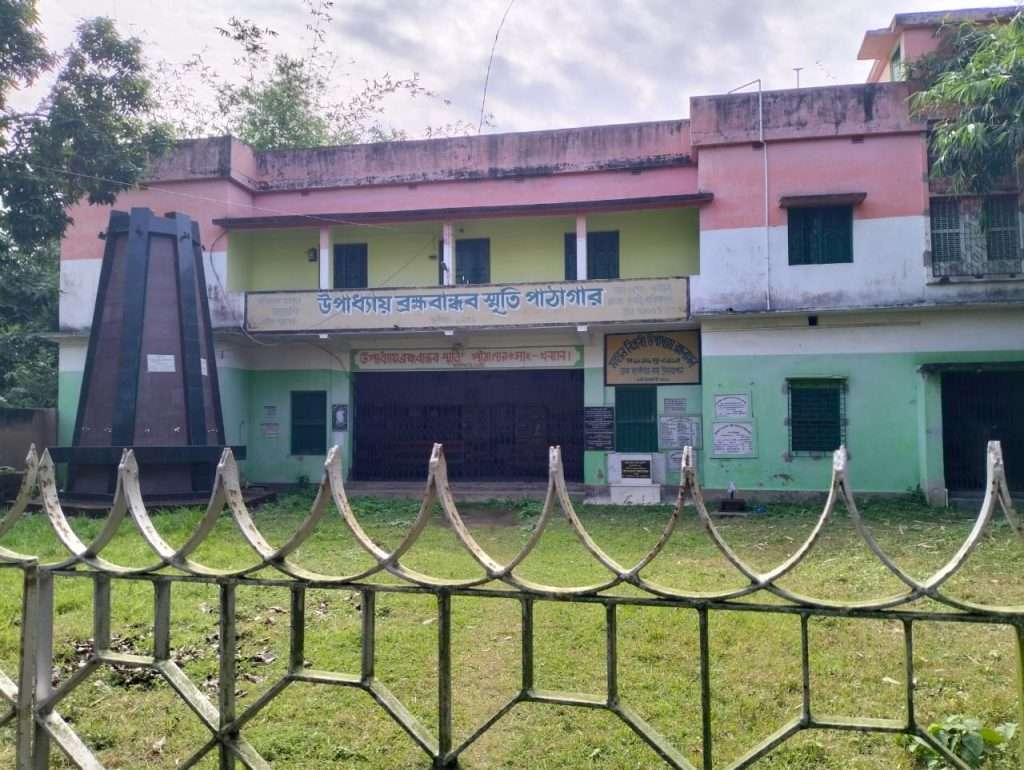
Upadhyay Brahmabandhab Smriti Library
Upadhyay Ebada’s collection of Shyati Panjala.
R. C. Talwar
No prophet is respected or accepted in his own society, community, or family. His voice remains a solitary one, often emerging from the wilderness. One reason for this is that not only is his message difficult to accept, but even his words are hard for his own people to digest. Sometimes, he may prefer to remain silent, but the Spirit of God will not allow him to find peace unless he echoes God’s mind through his words. Even when he cries out to God, asking to be left alone, God does not grant this; the prophet must continue to speak the truth, even when it is rejected.
Among Catholics, this challenge is compounded by their confinement within the legacy of the Church. Even when Catholic scholars articulate messages ahead of their time, their writings often remain “of the Church, for the Church, and by the Church.” For example, Catholic scholars like Raimon Panikkar, who left their religious orders, could not entirely escape this inner compulsion because their spiritual worldview was deeply shaped by Church doctrine.1 Despite attempts to contextualize their messages using Indian or Hindu terms, they often coined phrases that felt alien to both Hindu and Christian audiences. Terms like “Paska”—referring to the paschal lamb in Jewish tradition—or “Chuppi,” a form of retreat in Kerala Catholic ashrams, are incomprehensible to most Hindus and even some Christians. Personally, I have encountered situations where my own shishyas, unable to understand such terms used by a Catholic father, sought explanations from me, which I could only provide after consulting the father himself.
In contrast, Brahmabandhu Upadhyaya composed exceptional Sanskrit devotional songs that resonate deeply with traditional Hindu aesthetics while expressing the message of Muktiveda. This ability to convey profound ideas in the language of the people sets figures like him apart. His Sanskrit compositions stand as a testament to how an incarnational method—rather than mere contextualization—when executed with authenticity and cultural sensitivity, can break barriers of misunderstanding. His songs inspire me to strive for a deeper integration of faith and cultural expression. I often chant Upadhyaya’s famous Sanskrit songs, Vande Sachidanandam and Upachitachira, set to South Indian Carnatic classical music.2 These compositions serve as a model for how profound spiritual truths can be communicated in a culturally resonant manner.
Unlike Gandhi, who spoke in the people’s language, Catholic prophets often fail to bridge this gap. Gandhi’s ability to connect with the masses lay in his use of simple and relatable language. Learning from his example, we as Hindu bhaktas of the Lord must strive to remain true to our roots and communicate in ways that resonate with people. Otherwise, we risk falling into the same pattern where our words, though profound, fail to connect with the wider community.
A prophet accepts the life of a solitary voice because he refuses to conform to the collective image created by his community. He rejects captivity and always thinks beyond the limits of conventional thinking. This is something his contemporaries often fail to resonate with. His people refuse to engage with him, dismissing his messages as long, confusing, or complicated. However, this is inevitable for a prophet. For example, those who wished to engage with Mahatma Gandhi had to read his long responses, which often ran several pages. As a profound writer, Gandhi’s messages included multiple perspectives, attempting to defend his position from various angles. Amid this detail, his core message could be lost unless the reader remained attentive. In today’s digital age, where emojis have become the dominant mode of communication, Gandhi’s writings might be seen as inaccessible. Like him, every prophet faces the challenge of communicating their inner voice, received from God, within the limitations of their time.
Though ignored during his lifetime, a prophet remains true to his calling, continuing to echo God’s voice regardless of the neglect he faces. However, after his death, his work is often resurrected and glorified as the foundation of a particular movement. This was the fate of Brahmabandhu Upadhyaya. While alive, he wrote extensively, but his work was ignored and even ridiculed by his own Catholic Church. Yet, after his death, he was recognized as the father of Indian Christian theology.3
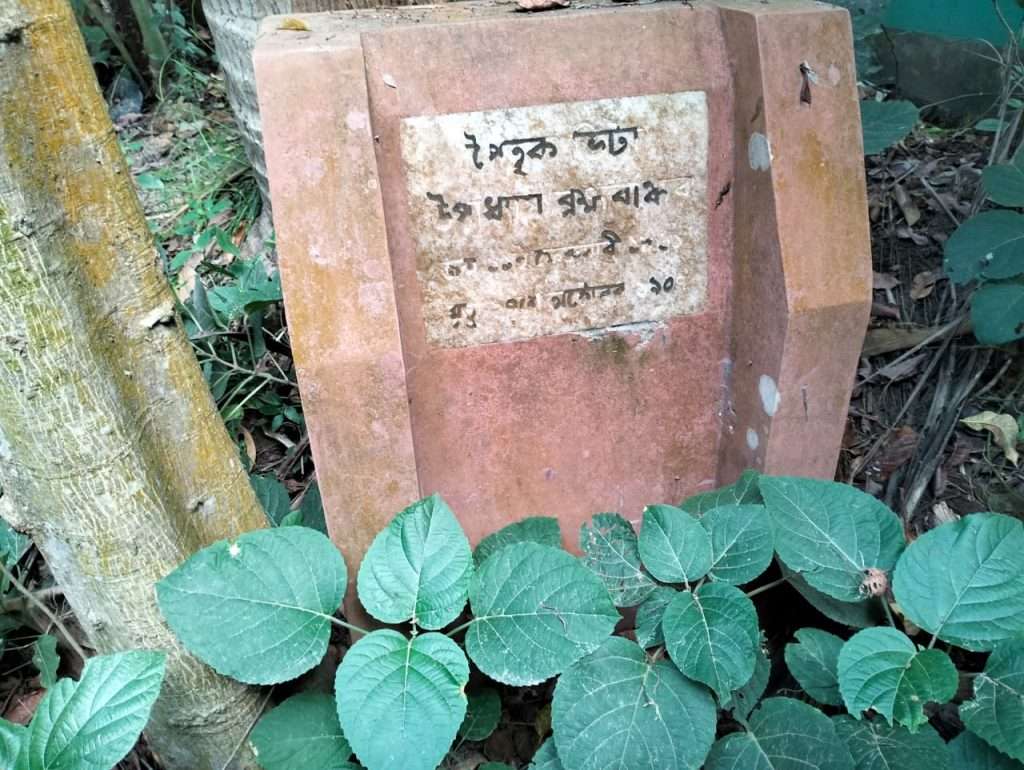
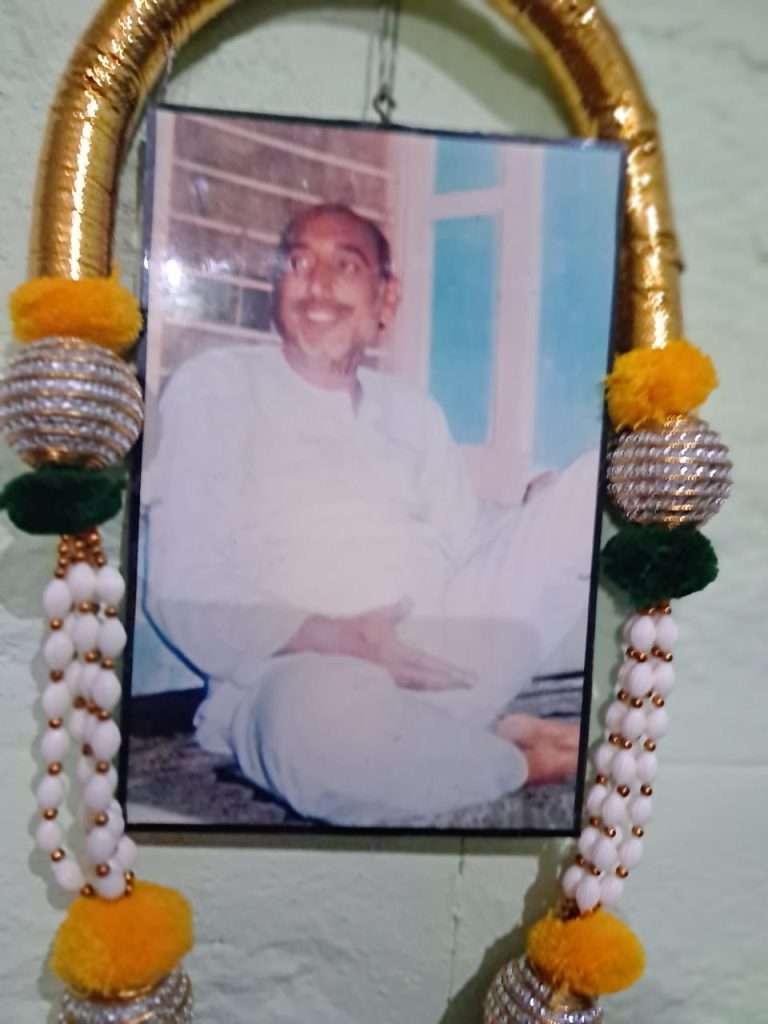
Recently, Sumit Goel visited Upadhyaya’s native place and was disheartened to find that his birthplace and ancestral property were in a state of neglect. The only marker of his memory was a small stone. While most homes in the village displayed a photo of Upadhyaya, only a handful of elderly people could recall and speak about his life and contributions. The younger generation was completely unaware of his legacy.
To the shame of the Church, yet to my consolation, the local villagers had not forgotten him entirely. They established a library in his name, where all his writings are preserved, and kept it open three days a week. Additionally, they celebrate his birthday every year on February 11th. God willing, I hope to visit the village on his birthday to pay my respects to this great thinker and bhakta of the Lord.
This neglect of visionaries is not limited to Upadhyaya. I witnessed a similar tragedy in the life of R.C. Talwar, another devoted bhakta who wholeheartedly pursued an incarnational approach. Unlike Upadhyaya, Talwar left no writings, as he was more of a karmayogi than a contemplative thinker. His service was action-oriented, deeply rooted in seva.
I had the privilege of knowing Talwar personally and collaborating with him in his seva. However, his later years were marked by immense hardship. Due to personal mistakes and significant financial losses in a business venture, he returned to his native place, only to be rejected by his own family and community. He found refuge with Hindu friends, who cared for him and supported him as best they could. Despite their help, Talwar lived in solitude until his passing, with his Hindu friends performing his final rites, not even his family members.
After his death, a close friend of Talwar’s approached me, asking if I could conduct a memorial puja for him at the ashram. I agreed, as I deeply respected Talwar and his work. The ceremony was conducted with sincerity, but what followed was deeply troubling to me. When I proposed keeping Talwar’s photo in the ashram as a tribute, some bhaktas objected for reasons known only to them. Their resistance disturbed me greatly. In response, I decided to keep Talwar’s photo in my personal room.
When I later moved to Mathigiri, I took his photo with me, ensuring it remained in a place of honor. Upon returning, I once again displayed it in my room. For as long as I live, I will continue to keep Talwar’s photo as a mark of respect. His life and work are a testament to the truth that every saint walks a solitary path with the Lord, their voice often misunderstood or ignored by the world around them.
These stories reveal a profound truth: saints and prophets, regardless of their era, are often solitary voices. They are called to journey alone with the Lord, their message resonating only with those willing to listen deeply. While their legacies may seem forgotten by their contemporaries, their lives and contributions echo through time, carrying the weight of divine truth.
When Sumit shared this and sent a photo, I responded, saying that such prophets and thinkers never need physical monuments to represent their legacy. Their legacy lives on in their writings, poems, and thoughts. These are the same writings that the Church later compiled, edited, and published for its own purposes, selectively using his work when it served them while ignoring him otherwise.
Thankfully, some of his thoughts and writings were preserved in archives. Now, in the digital age, his legacy has a new lease of life. His words and writings are stored as data in the digital universe. As long as digital media and the internet exist, his legacy will continue to echo in the corners of the digital realm, always remaining a solitary voice.
This phenomenon is not unique to Upadhyaya. Many figures, including Mahatma Gandhi and R.C. Das, faced similar neglect. Interestingly, while their own people and communities often ignored them, outsiders sometimes recognized their contributions. For instance, even a BJP leader acknowledged Upadhyaya’s work, publishing a message about him on his birthday, while the Church that once ignored him remained silent.
Even when society tries to ignore such figures, their legacy cannot be erased. The solitary voice of a prophet transcends the limitations of time and community. It resonates in unexpected places, often reaching those outside the prophet’s immediate circle. As the world grapples with challenges of division and misunderstanding, the need for such voices becomes ever more urgent. They remind us of the profound truths that unite us across differences and call us to a deeper engagement with our shared humanity. In this, the solitary voice finds its enduring relevance, echoing God’s truth for generations to come.
16-12-2024, Gurukulam
Notes
- A compelling example of this can be found in the book: Gispert-Sauch, S.J. (Ed.). God’s Word Among Men: Papers in Honour of Fr. Joseph Putz, S.J. Delhi: Vidyajoti, 1973. Most of the authors, who are Catholic scholars and theologians, attempt to ‘contextualize’ their Catholic doctrine to Indian contexts. However, they cannot completely avoid the influence of their Catholic doctrinal framework, which is understandable. I have explored related themes in the following articles:
- Vaac and Word [Logos]: https://dayanandbharati.in/vaac-and-word-logos/
- Unknown God is Not Universal Christ: https://dayanandbharati.in/unknown-god-is-not-universal-christ/
- Square Round: https://dayanandbharati.in/square-round/
- See Appendix.
- Despite the Church’s initial rejection of Brahmabandhu Upadhyaya, even banning its members from subscribing to his magazine and nearly excommunicating him, credit must be given to the Church for later preserving his writings and magazines. These materials became essential resources for scholars to explore his life and contributions. For an excellent study on Upadhyaya, see Lipner, Julius J. Brahmabandhab Upadhyaya: The Life and Thought of a Revolutionary. Delhi: Oxford University Press, 1999. I have reviewed this book here:
Appendix
Sanskrit:
वन्दे सच्चिदानन्दम्।
भोगिलाञ्छितयोगिवाञ्छितचरमपदम्। [Refrain]
परमपुराणपरात्परम्,
पूरमखण्डापरावरम्,
त्रिसङ्गशुद्धमसङ्गबुद्धं दुर्वेदम्।
पितृसवितृपरमेशमजम्,
भववृक्षबीजमबीजम्,
अखिलकारणमीक्षणसृजनगोविन्दम्।
अनाहतशब्दमनन्तम्,
प्रसूतरुरुचिसुमहान्तम्,
पितृस्वरूपचिन्मय-रूपसुमुकुन्दम्।
सच्चिदोर्मेलन-शरणम्,
शुभस्वस्तीतानन्दघनम्,
पावनजवन-वानिवदन-जीवनदम्।
— ब्रह्मबन्धव उपाध्याय
Transliteration:
Vande Sac-cid-ānandam.
Bhogi-lāñchita-yogi-vānchita-carama-padam. [Refrain]
Parama-purāṇa-parātparam,
Pūrama-khaṇḍā-parāvaram,
Tri-saṅga-śuddham asanga-buddham durvedam.
Pitṛ-savitṛ-parameśam ajam,
Bhava-vṛkṣa-bījam abījam,
Akhila-kāraṇam īkṣaṇa-sṛjana-govindam.
Anāhata-śabdam anantam,
Prasūta-puruṣa-sumahaantam,
Pitṛ-svarūpa-cinmaya-rūpa-sumukundam.
Sac-cidor melana-śaraṇam,
Śubha-svasitānanda-ghanam,
Pāvana-javana-vānīvadana-jīvanadam.
— Brahmabandhav Upadhyay
Hymn to the Word Incarnate
— ब्रह्मबन्धव उपाध्याय (Brahmabandhav Upadhyay)
उपचित-चिर-चिन्मुकुरित प्रतिबिम्बित
ब्रह्म-परात्पर-रूप जय देव (३) नरहरे। (१)
कनक-कुमारी-बालक भव-चालक
निर्गुण-गुणाभिराम—जय देव (३) नरहरे। (२)
पण्डित-मण्डल-मण्डन भय-खण्डन
दण्डित-भण्डन-भूत—जय देव (३) नरहरे। (३)
आधि-व्याधि-विताडन पर-सेवन
पावन-लीला-खेल—जय देव (३) नरहरे। (४)
विनि-वेदित-निजवदन भलि-जीवन
कृत-किल्बिष-विनाश—जय देव (३) नरहरे। (५)
ललित-दयित-हृद्रञ्जन नय-नाञ्जन
सुदलित-काल-कराल—जय देव (३) नरहरे। (६)
Hymn to the Word Incarnate
— Brahmabandav UPadhyay. Trans by G. Gispert Sauch. Taken from, The Indian Christiad, Anand Amaladass, S.J. and Richard Fox Young, Anand, Gujarat Sahitya Prakash, 1995, pp.362-63.
upacita-cira-cinmukurita prati-bimbita
brahma-paraatpara-ruupa-jaya deva (3) narahare. (1)
kanaka-kumaarii-baalaka bhava-caalaka
nirguna-gunaabhiraama—jaya deva (3) narahare. (2)
pandita-mandala-mandana bhaya-khandana
dandita-bhandana-bhuuta—jayadeva(3) narahare. (3)
aadhi-vyaadhi-vitaadana para-sevana
paavana-liilaa-khela—jayadeva (3) narahare. (4)
vini-vedita-nijavadana bhli-jiivana
krta-kilbisa-visanaasa—jaya deva (3) narahare. (5)
lalita-dayita-hrdranjana naya-naanjana
suda-lita-kaala-karaala-jayadeva (3) narahare. (6)
Victory to you, Lord, the God-man,
flowering of the eternal Wisdom,
the reflection of Brahman,
with beauty far-transcending! (1)
Victory to you, Lord, the God-Man,
Child of the fair Virgin,
yet Ruler of the universe,
with your qualities enchanting, yet beyond qualities! (2)
Victory to you, the God-Man,
radiant gem in the assembly of the learned,
the Vanquisher of temptation,
the Chastiser of the evil one! (3)
Victory to you, Lord the God-Man,
the Destroyer of all infirmities,
Love in brotherly service,
sanctifying the marvellouw works! (4)
Victory to you, Lord, the God-Man,
lifting yourself up in self-offering,
the sacrifice of your life,
destroying the poison of our sin! (5)
Victory to you, Lord, the God-Man,
beloved, gentle, the joy of our heart,
ointment of delight to our eyes,
victorious Crusher of cruel death! (6)
Leave a Reply