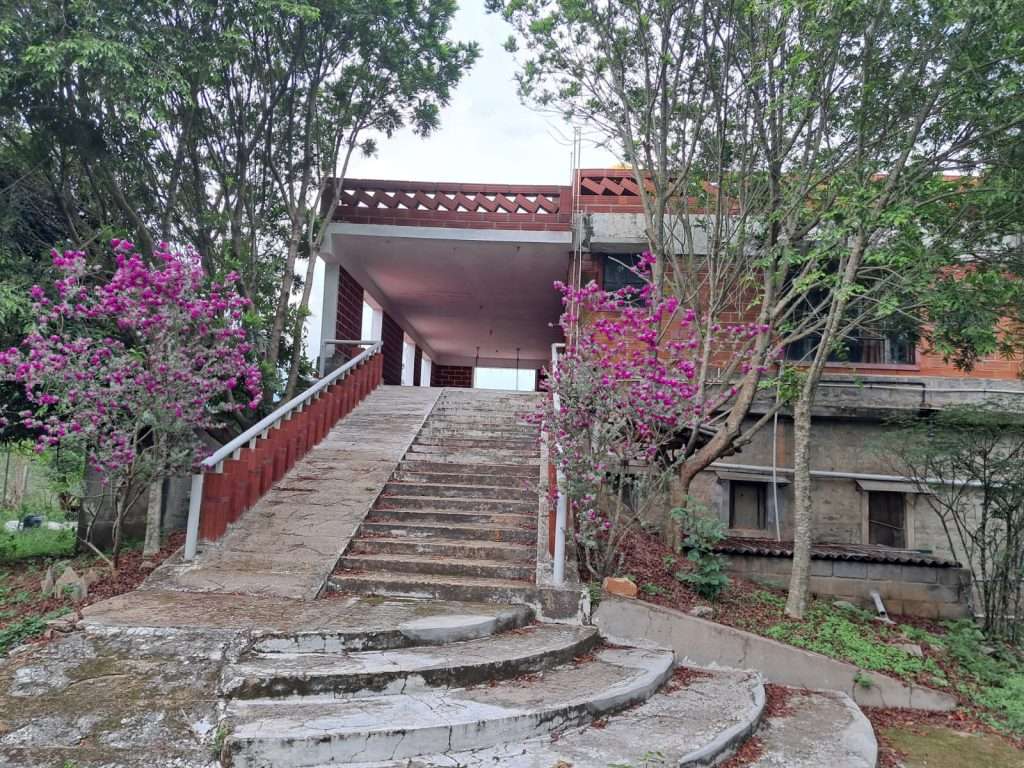
These violet flowers have blossomed beautifully—perhaps the only sincere devotees brave enough to attend the daily sadhana of silence in our Dhyana Mandapa.
Welcome, dear Sadhakas!
…Wait. Where is everyone?
Ah yes. The sadhana of silence has become so successful that participation has reached its highest spiritual state: zero.
This is one of those rare and miraculous Dhyana Mandapas that enjoys permanent peace, absolute calm, and uninterrupted tranquility. And here comes the philosophical twist: not because it is inside an ashram, suspiciously close to a forest, or conveniently distant from the noises and anxieties of civilization.
No. The deeper truth is far more profound.
There is simply nobody inside.
As a result, the tranquility of the Dhyana Mandapa is perfectly protected from its greatest natural enemy: human beings.
Meanwhile, I remain occupied reading, writing, and caring for visiting guests like a slightly overworked guardian of the ashram. I do not teach—not because I have ascended to such lofty philosophical heights that teaching has become unnecessary, nor because others have unanimously concluded that sitting and listening is a dangerous recreational activity. Though, if you are reading this on your mobile phone, I can understand their hesitation.
The few visitors who actually reach this sacred place remain permanently, heroically, and tragically busy with their gadgets. Mobile phones, laptops, tablets, social media—modern instruments of uninterrupted concentration on everything except the present moment.
Scroll.
Swipe.
Like.
Post.
Meditation?
No time.
One must first document the meditation for Instagram.
The Dhyana Mandapa watches all this with the patience of a sage and the resignation of a government clerk.
As for many of the original ashram members, they are so busy that they do not even have time to visit the meditation hall built for meditation. Perhaps this is the highest form of non-attachment.
The modern irony is magnificent: we construct such beautiful structures, photograph them, inaugurate them, admire them, preserve them—and then leave them behind as monuments to intentions never fulfilled.
The dry leaves scattered on the steps provide historical evidence. No human has committed the great crime of disturbing the silence by taking even a single step inside.
The leaves sit there like village elders, giving sworn testimony:
“Yes, we have been here for thirty years.”
“Nobody has touched us.”
“The silence is so complete that even the dust feels self-conscious.”
Thus the Dhyana Mandapa continues its silent sadhana, entirely untroubled by human invasion. Yet the cosmic irony is so sharp it could cut through a philosophy textbook.
The hall was built by human hands.
For human beings.
So that human beings could come and sit in silence.
And then…
they never came.
What an achievement!
Many meditation halls struggle for decades to attain such perfect stillness. This one accomplished it immediately by eliminating the meditators.
And so we arrive at the great philosophical lesson hidden within this comedy:
Wherever you encounter beauty, peace, or tranquility, if you truly wish to preserve it, perhaps the wisest thing is not to disturb it.
Arrive—and you may spoil it.
Stay away—and it remains perfect.
The universe, meanwhile, laughs quietly in the background.
Only then can one begin to understand the true meaning of peace and calm.
Sometimes the highest spiritual practice is doing nothing.
Sometimes it is doing absolutely nothing.
And occasionally, the highest form of participation is not showing up at all.
The Dhyana Mandapa has attained this wisdom through an ancient discipline practiced by generations of seekers:
Nobody caring enough to come.
The violet flowers are laughing now.
The dry leaves are glaring.
They have waited patiently for decades, expecting someone, anyone, to arrive.
Instead, everyone keeps leaving.
Perhaps the flowers and the leaves are the only true residents of the Dhyana Mandapa.
And perhaps they are the only ones who fully understand the joke.
Ashram, June 1, 2026
Reflection by Dayanand
Poem generated by ChatGPT
The Enlightened Meditation Hall
A meditation hall stands deep and still,
Upon the ashram’s quiet hill.
Built for seekers, saints, and sages,
To sit in silence through the ages.
The roof is strong, the floor is clean,
The calmest place you’ve ever seen.
No chanting monks, no yoga class—
Just dust and leaves upon the grass.
The violet flowers bloom each year,
The only devotees who appear.
They bow before the empty space
And blossom with remarkable grace.
The hall has mastered every art
Described in scriptures, verse, and chart.
No anger, greed, attachment, fear—
For nobody has entered here.
The leaves upon the ancient stair
Have held their meeting thirty years.
Like village elders, dry and wise,
They testify with rustling sighs:
“We’ve watched the seasons come and go,
We’ve seen the sun and monsoon flow.
No footstep came to break the spell;
Humanity is doing well.”
A pilgrim comes with noble aim,
A smartphone glowing like a flame.
He takes three photos, checks his feed,
And leaves fulfilled his spiritual need.
Another comes to seek the Truth,
Armed with enthusiasm and youth.
He posts, “Meditating at the Hall!”
Then never meditates at all.
The hall remains serenely bright,
Untroubled day and untroubled night.
No arguments, no sects, no schools,
No committees making rules.
No teacher there to proudly teach,
No students there beyond his reach.
No questions asked, no answers known,
The wisdom grows completely alone.
The irony is deep indeed:
The hall was built for human need.
By human hands, with human plans,
For gatherings of human clans.
Yet humans, in their endless quest,
Concluded absence works the best.
And so the hall attained a state
That mystics seek but rarely meet.
It conquered noise and restless thought
By finding seekers who came not.
The flowers laugh beside the wall,
“The hall has understood it all.
The surest path to perfect peace
Is simply giving crowds release.”
The leaves agree with gentle sound,
Still undisturbed upon the ground.
“The world keeps searching far and wide,
While silence waits here, unoccupied.”
And if you ask what lesson lies
Beneath this joke so old and wise,
The answer comes both sharp and kind:
Where humans go, they seldom find.
Where humans stop, and cease to roam,
Peace was quietly there all along.
The meditation hall knows this.
Its enlightenment is hard to miss.
For after all these passing years,
Its greatest achievement appears to be
Attaining Nirvana effortlessly—
By nobody showing up.
Ashram, June 1, 2026
The article is already in English, but here is a polished English version followed by a poetic, conversational Hindi rendering of the poem.
English Article
The Enlightened MT Dhyana Mandapa: How a Meditation Hall Attained Nirvana by Nobody Showing Up
These violet flowers have blossomed beautifully—perhaps the only sincere devotees brave enough to attend the daily sadhana of silence in our Dhyana Mandapa.
Welcome, dear Sadhakas!
…Wait. Where is everyone?
Ah yes. The sadhana of silence has become so successful that participation has reached its highest spiritual state: zero.
This is one of those rare and miraculous Dhyana Mandapas that enjoys permanent peace, absolute calm, and uninterrupted tranquility. And here comes the philosophical twist: not because it is inside an ashram, close to a forest, or far away from the noise and worries of civilization.
No. The deeper truth is far more profound.
There is simply nobody inside.
As a result, the tranquility of the Dhyana Mandapa is perfectly protected from its greatest natural enemy: human beings.
Meanwhile, I remain occupied reading, writing, and caring for visiting guests like a slightly overworked guardian of the ashram. I do not teach—not because I have attained such lofty wisdom that teaching has become unnecessary, nor because others have unanimously decided that sitting and listening is too demanding. Though, if you are reading this on your mobile phone, I can understand their point.
The few visitors who actually reach this sacred place remain permanently busy with their gadgets. Mobile phones, laptops, tablets, and social media—the modern instruments of uninterrupted concentration on everything except the present moment.
Scroll.
Swipe.
Like.
Post.
Meditation?
No time.
One must first document the meditation for Instagram.
The Dhyana Mandapa watches all this with the patience of a sage and the resignation of a government clerk.
As for many of the original ashram members, they are so busy that they do not even have time to visit the meditation hall built for meditation. Perhaps this is the highest form of non-attachment.
The modern irony is magnificent: we construct beautiful structures, photograph them, inaugurate them, admire them, preserve them—and then leave them behind as monuments to intentions never fulfilled.
The dry leaves scattered on the steps provide historical evidence. No human has committed the great crime of disturbing the silence by taking even a single step inside.
The leaves sit there like village elders, giving sworn testimony:
“Yes, we have been here for thirty years.”
“Nobody has touched us.”
“The silence is so complete that even the dust feels self-conscious.”
Thus the Dhyana Mandapa continues its silent sadhana, entirely untroubled by human invasion. Yet the cosmic irony is so sharp it could cut through a philosophy textbook.
The hall was built by human hands.
For human beings.
So that human beings could come and sit in silence.
And then…
they never came.
What an achievement!
Many meditation halls struggle for decades to attain such perfect stillness. This one accomplished it immediately by eliminating the meditators.
And so we arrive at the great philosophical lesson hidden within this comedy:
Wherever you encounter beauty, peace, or tranquility, if you truly wish to preserve it, perhaps the wisest thing is not to disturb it.
Arrive—and you may spoil it.
Stay away—and it remains perfect.
The universe, meanwhile, laughs quietly in the background.
Only then can one begin to understand the true meaning of peace and calm.
Sometimes the highest spiritual practice is doing nothing.
Sometimes it is doing absolutely nothing.
And occasionally, the highest form of participation is not showing up at all.
The Dhyana Mandapa has attained this wisdom through an ancient discipline practiced by generations of seekers:
Nobody caring enough to come.
The violet flowers are laughing now.
The dry leaves are glaring.
They have waited patiently for decades, expecting someone, anyone, to arrive.
Instead, everyone keeps leaving.
Perhaps the flowers and the leaves are the only true residents of the Dhyana Mandapa.
And perhaps they are the only ones who fully understand the joke.
प्रबुद्ध एमटी ध्यान मंडप: कैसे एक ध्यान-हाल ने किसी के न आने से निर्वाण प्राप्त कर लिया
ये बैंगनी फूल कितने सुंदर खिले हैं—शायद यही वे एकमात्र सच्चे भक्त हैं जो हमारे ध्यान मंडप में प्रतिदिन होने वाली मौन-साधना में भाग लेने का साहस रखते हैं।
स्वागत है, प्रिय साधकों!
…रुकिए।
सब लोग कहाँ हैं?
ओह, हाँ।
मौन-साधना इतनी सफल हो गई है कि उसकी सहभागिता अपनी सर्वोच्च आध्यात्मिक अवस्था तक पहुँच चुकी है: शून्य।
यह उन दुर्लभ और चमत्कारिक ध्यान मंडपों में से एक है जहाँ स्थायी शांति, पूर्ण निश्चलता और अखंड सुकून विराजमान हैं। और यहाँ एक दार्शनिक मोड़ भी है। यह इसलिए नहीं कि यह आश्रम के भीतर है, जंगल के खतरनाक रूप से निकट है, या सभ्यता की आवाज़ों और चिंताओं से सुविधाजनक दूरी पर स्थित है।
नहीं।
सच्चाई इससे भी अधिक गहरी है।
अंदर कोई है ही नहीं।
फलस्वरूप, ध्यान मंडप की शांति उसके सबसे बड़े प्राकृतिक शत्रु—मनुष्यों—से पूरी तरह सुरक्षित है।
उधर मैं आश्रम के कुछ अधिक काम में लगे संरक्षक की तरह पढ़ने, लिखने और आने वाले अतिथियों की देखभाल में व्यस्त रहता हूँ। मैं शिक्षा नहीं देता—न इसलिए कि मैं ऐसे ऊँचे दार्शनिक शिखरों पर पहुँच गया हूँ जहाँ शिक्षण की आवश्यकता ही समाप्त हो जाती है, और न इसलिए कि लोगों ने सर्वसम्मति से यह निर्णय ले लिया है कि बैठकर सुनना एक खतरनाक मनोरंजन है। हालाँकि यदि आप यह लेख अपने मोबाइल पर पढ़ रहे हैं, तो उनकी झिझक मैं समझ सकता हूँ।
जो कुछ लोग वास्तव में इस पवित्र स्थान तक पहुँच भी जाते हैं, वे अपने उपकरणों में स्थायी, वीरतापूर्ण और दुखद रूप से व्यस्त रहते हैं। मोबाइल फ़ोन, लैपटॉप, टैबलेट, सोशल मीडिया—वर्तमान क्षण को छोड़कर हर चीज़ पर ध्यान केंद्रित करने के आधुनिक साधन।
स्क्रॉल।
स्वाइप।
लाइक।
पोस्ट।
ध्यान?
समय नहीं है।
पहले ध्यान का इंस्टाग्राम पर दस्तावेज़ीकरण करना आवश्यक है।
ध्यान मंडप यह सब एक ऋषि के धैर्य और एक सरकारी बाबू की विवश स्वीकृति के साथ देखता रहता है।
और जहाँ तक आश्रम के पुराने सदस्यों का प्रश्न है, वे इतने व्यस्त हैं कि ध्यान के लिए बनाए गए इस ध्यान मंडप तक आने का समय भी नहीं निकाल पाते। शायद यही अनासक्ति का सर्वोच्च रूप है।
आधुनिक विडम्बना भी अद्भुत है। हम ऐसे सुंदर भवन बनाते हैं, उनकी तस्वीरें लेते हैं, उनका उद्घाटन करते हैं, उनकी प्रशंसा करते हैं, उन्हें संरक्षित रखते हैं—और फिर उन्हें अधूरी इच्छाओं के स्मारक बनाकर छोड़ देते हैं।
सीढ़ियों पर बिखरे सूखे पत्ते ऐतिहासिक प्रमाण प्रस्तुत करते हैं। किसी मनुष्य ने भीतर एक कदम रखकर मौन को भंग करने का महान पाप तक नहीं किया है।
वे पत्ते गाँव के बुज़ुर्गों की तरह बैठे हुए शपथपूर्वक गवाही देते हैं—
“हाँ, हम यहाँ तीस वर्षों से हैं।”
“किसी ने हमें छुआ तक नहीं।”
“यहाँ का मौन इतना पूर्ण है कि धूल भी स्वयं को लेकर संकोच महसूस करती है।”
इस प्रकार ध्यान मंडप अपनी मौन-साधना में निरंतर लगा हुआ है, मानवीय आक्रमणों से पूरी तरह अप्रभावित। किंतु इस ब्रह्मांडीय विडम्बना की धार इतनी तीखी है कि उससे दर्शनशास्त्र की कोई पाठ्यपुस्तक भी काटी जा सकती है।
यह भवन मनुष्यों ने बनाया।
मनुष्यों के लिए बनाया।
ताकि मनुष्य आकर इसमें बैठें और मौन का अभ्यास करें।
और फिर…
वे कभी आए ही नहीं।
क्या उपलब्धि है!
अनेक ध्यान-हाल दशकों तक ऐसी पूर्ण निश्चलता प्राप्त करने के लिए संघर्ष करते रहते हैं। इसने तो साधकों को ही अनुपस्थित करके यह लक्ष्य तुरंत प्राप्त कर लिया।
और इस प्रकार हम इस हास्य के भीतर छिपे महान दार्शनिक पाठ तक पहुँचते हैं—
जहाँ कहीं भी आपको सौंदर्य, शांति या सुकून मिले, यदि आप वास्तव में उसे सुरक्षित रखना चाहते हैं, तो शायद सबसे बुद्धिमानी की बात यही है कि उसे परेशान न करें।
आ जाइए—और संभव है आप उसे बिगाड़ दें।
दूर रहिए—और वह पूर्ण बना रहेगा।
उधर ब्रह्मांड चुपचाप मुस्कुरा रहा है।
तभी कोई शांति और निश्चलता का वास्तविक अर्थ समझना शुरू कर सकता है।
कभी-कभी सर्वोच्च साधना कुछ न करना होती है।
कभी-कभी बिल्कुल कुछ भी न करना होती है।
और कभी-कभी सहभागिता का सर्वोच्च रूप है—आना ही नहीं।
ध्यान मंडप ने यह ज्ञान उस प्राचीन अनुशासन के माध्यम से प्राप्त किया है जिसका अभ्यास पीढ़ियों से साधक करते आए हैं—
इतनी भी परवाह न करना कि यहाँ आया जाए।
अब बैंगनी फूल हँस रहे हैं।
सूखे पत्ते घूर रहे हैं।
वे दशकों से धैर्यपूर्वक प्रतीक्षा कर रहे थे कि कोई आएगा, कोई तो आएगा।
लेकिन इसके बजाय सब लोग जाते ही रहते हैं।
शायद वे फूल और वे पत्ते ही ध्यान मंडप के वास्तविक निवासी हैं।
और शायद वही इस पूरे मज़ाक को सचमुच समझते हैं।
आश्रम
1 जून 2026
Reflection by Dayanand
Poem generated by ChatGPT
प्रबुद्ध ध्यान मंडप
आश्रम की चुप पहाड़ी पर,
एक ध्यान मंडप खड़ा हुआ है।
साधकों, संतों, योगियों के लिए,
बड़े प्रेम से बनाया गया है।
छत भी मज़बूत, फर्श भी साफ,
चारों ओर शांति का राज।
न कोई कीर्तन, न प्रवचन,
बस सूखे पत्तों की आवाज़।
बैंगनी फूल हर साल खिलते,
यही इसके सच्चे भक्त हैं।
समय पर आते, सिर झुकाते,
और बिना शोर के हँसते हैं।
ध्यान मंडप ने साध ली है
हर वह विद्या, हर वह ज्ञान,
जिसे पाने को लोग भटकते—
जंगल, पर्वत और तीर्थ स्थान।
न क्रोध इसमें, न लोभ कहीं,
न मोह, न कोई विवाद।
क्योंकि इतने वर्षों से इसमें
आया ही नहीं कोई इंसान।
सीढ़ियों पर बैठे सूखे पत्ते
गाँव के बुज़ुर्ग लगते हैं।
सरसराहट में गवाही देते,
और मुस्कुराकर कहते हैं—
“तीस बरस से यहीं पड़े हैं,
किसी ने हमको छुआ नहीं।
इतनी गहरी शांति है यहाँ,
कि धूल भी हिलती नहीं।”
कभी कोई यात्री आता है,
बड़े उत्साह से, बड़े शौक़ से।
मोबाइल निकालता है पहले,
ध्यान बाद में… या फिर कभी नहीं।
एक फोटो, दो फोटो,
फिर सेल्फ़ी, पोस्ट और स्टेटस।
“आज ध्यान में लीन हूँ” लिखकर,
खुद ही तोड़ देता है फोकस।
मंडप चुपचाप देख रहा है,
जैसे कोई बूढ़ा ज्ञानी।
या फिर कोई सरकारी बाबू,
जिसने सबकी आदत जानी।
विडम्बना भी कम नहीं है—
यह भवन इंसानों ने बनाया।
इंसानों के बैठने को बनाया,
इंसानों ने ही छोड़ भुलाया।
और इस तरह ध्यान मंडप ने
एक अनोखी सिद्धि पा ली।
जिस शांति को ऋषि खोजते हैं,
उसने बिना कोशिश पा ली।
न भीड़ आई, न चर्चा हुई,
न किसी ने नियम बनाए।
शांति बची रही इसलिए,
कि लोग कभी अंदर न आए।
फूल हँसते हैं, पत्ते हँसते हैं,
हवा भी हँसकर कहती है—
“लोग शांति ढूँढते फिरते हैं,
शांति तो यहीं बैठी रहती है।”
शायद यही इस कथा का सार,
यही इसका सबसे बड़ा ज्ञान—
कभी-कभी सबसे ऊँची साधना
कुछ भी न करना है, श्रीमान।
और कभी-कभी सबसे गहरा ध्यान
बैठना भी नहीं, आना भी नहीं।
ध्यान मंडप ने निर्वाण पाया—
क्योंकि कोई आया ही नहीं।
Leave a Reply